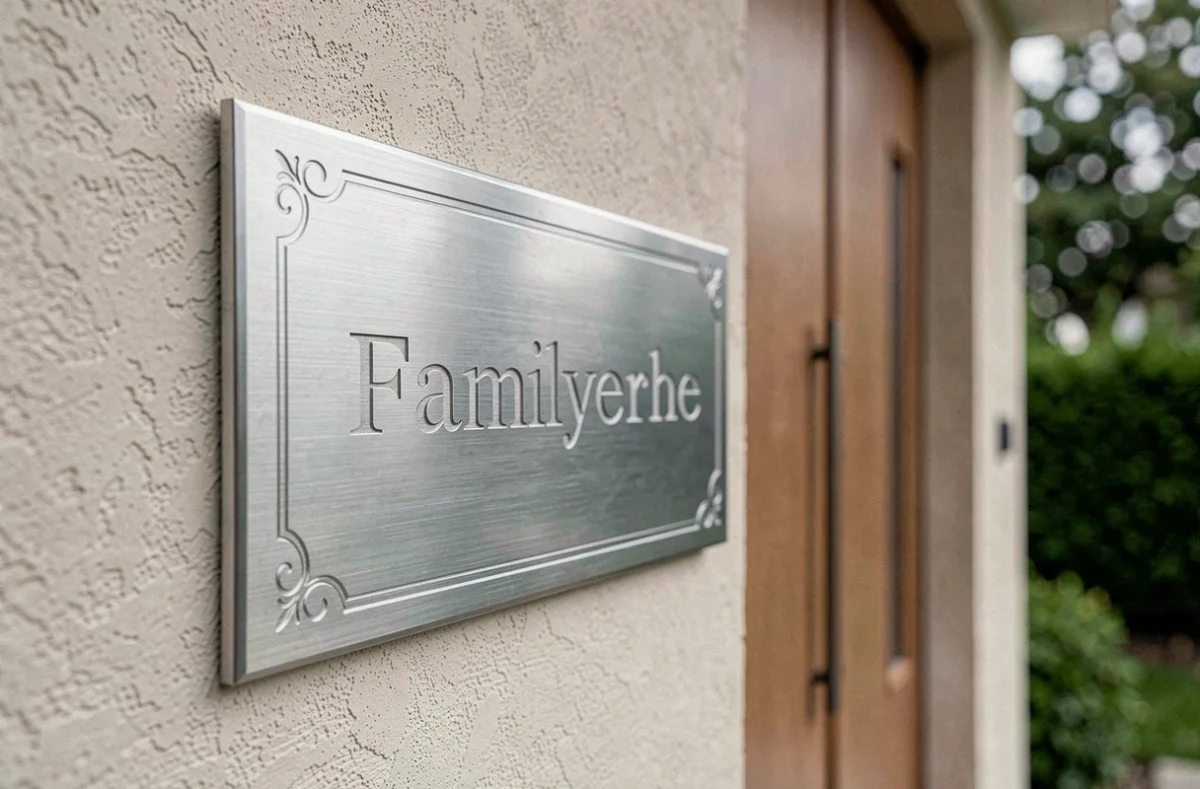
The laser-engraved mailbox plaque is gradually replacing handwritten or printed labels on the facades of individual houses. The process, which relies on a laser beam locally heating the surface of the material until it changes color, produces a permanent marking without mechanical contact. However, laser engraving alone does not determine the longevity of a plaque: the support, finish, and exposure conditions play at least as decisive a role.
Laser engraving and plaque material: a duo that should not be separated
The laser allows for working with aluminum, stainless steel, PVC, wood, or even plexiglass. Each material reacts differently to the beam, which influences the contrast obtained and the durability of the marking over time.
For a plaque exposed outdoors, anodized aluminum and stainless steel limit the degradation of markings against UV rays and humidity. Engraved PVC offers a good price-quality ratio, but its resistance to prolonged sunlight depends on the thickness and pigmentation chosen. Wood, appealing aesthetically, requires regular surface treatment to maintain the readability of the engraving.
Manufacturers who offer to learn more about Sidonie & Gédéon often detail the material-color combinations suitable for each installation context, which helps go beyond the simple choice of engraving process.
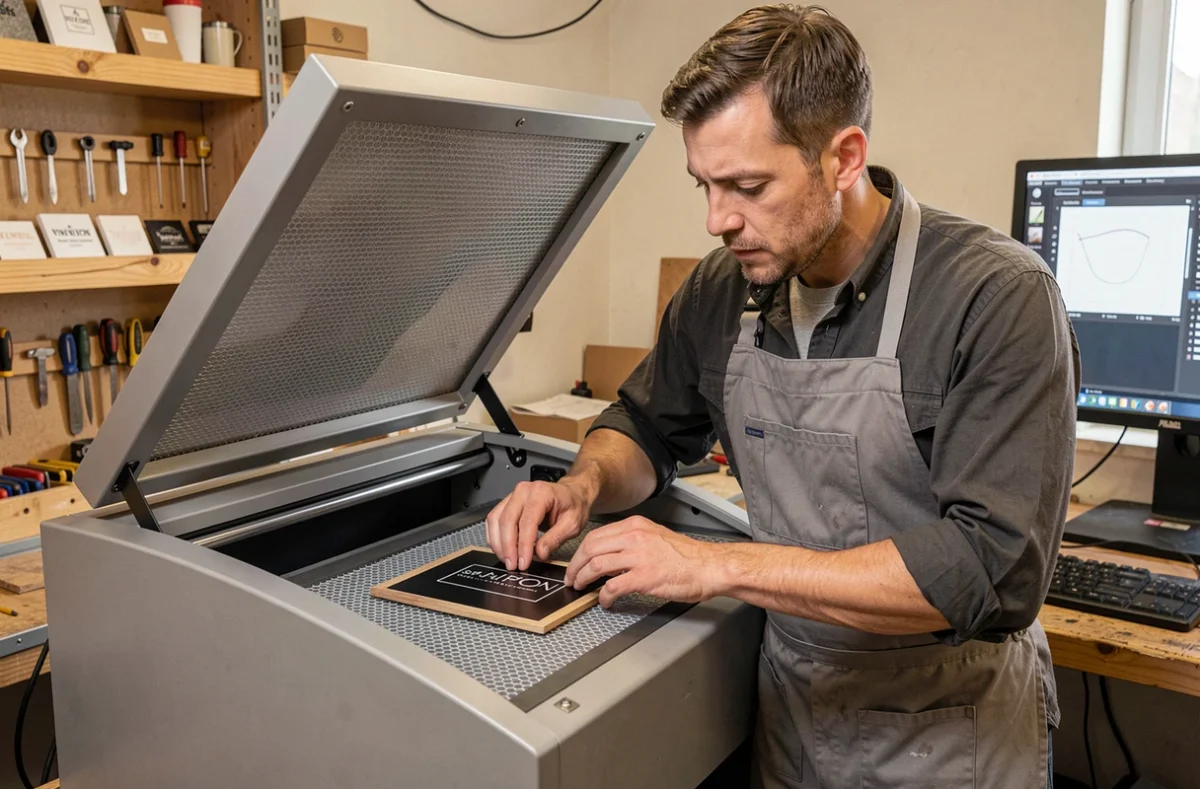
On the other hand, mechanical engraving (milling) physically carves the support. It is suitable for thick plaques made of brass or solid aluminum. The laser does not carve the material but modifies the surface, preserving the structural integrity of thin or flexible plaques, typically those intended for adhesive bonding.
Readability from the street: a criterion that laser finesse does not solve alone
Laser engraving allows for very fine fonts and graphic details (family pictograms, small logos) that are impossible to reproduce neatly with mechanical engraving. This precision can become a trap if the plaque is meant to be read from a distance.
Readability must be considered from the mail carrier’s perspective, not just from that of the owner standing at their door. For an individual house, identification should be readable from the access area without crossing a gate. This implies choosing a sufficient character size and a strong contrast between the background and the engraved text.
Some parameters to check before confirming an order:
- The height of the characters in the last name, which must remain readable from several meters depending on the mailbox’s location relative to the access road.
- The contrast between the color of the support and that of the engraved text: a black background with white engraving or a brushed aluminum background with black engraving offers good readability in natural light.
- The orientation of the plaque concerning the dominant lighting, as a permanent reflection on a shiny surface negates the benefit of careful engraving.
Fixing plaque in a condominium: a constraint often overlooked
The quality of laser engraving becomes secondary if the plaque cannot be installed. In collective housing, a co-owner cannot necessarily modify the mailbox block without permission. Drilling a common support or gluing a plaque on a common area may require agreement in a general assembly, depending on the condominium regulations.
Field feedback varies on this point: some property managers tolerate repositionable adhesive plaques, while others require uniform signage across all mailboxes. Permanent engraving, by nature difficult to remove without leaving a trace, poses an additional problem in rental buildings where occupants frequently change.
For an individual house occupied by the same family over the long term, this constraint disappears. It is in this context that laser engraving becomes particularly relevant: a plaque engraved for a stable family in an individual house justifies the investment in permanent marking.
Adhesive or screwing: which fixing method to prioritize
The fixing method depends on the destination support. On a metal mailbox, high-strength double-sided adhesive works well if the surface is flat and degreased. On a plastered wall or an irregular surface, screwing remains more reliable.
Some laser-engraved PVC or plexiglass plaques are thin enough for simple gluing. Thicker aluminum plaques often require pre-drilled fixing holes. Checking this detail before ordering avoids having to drill a marked plaque yourself, risking damage to the marking.
Personalizing a family plaque: what the laser changes concretely
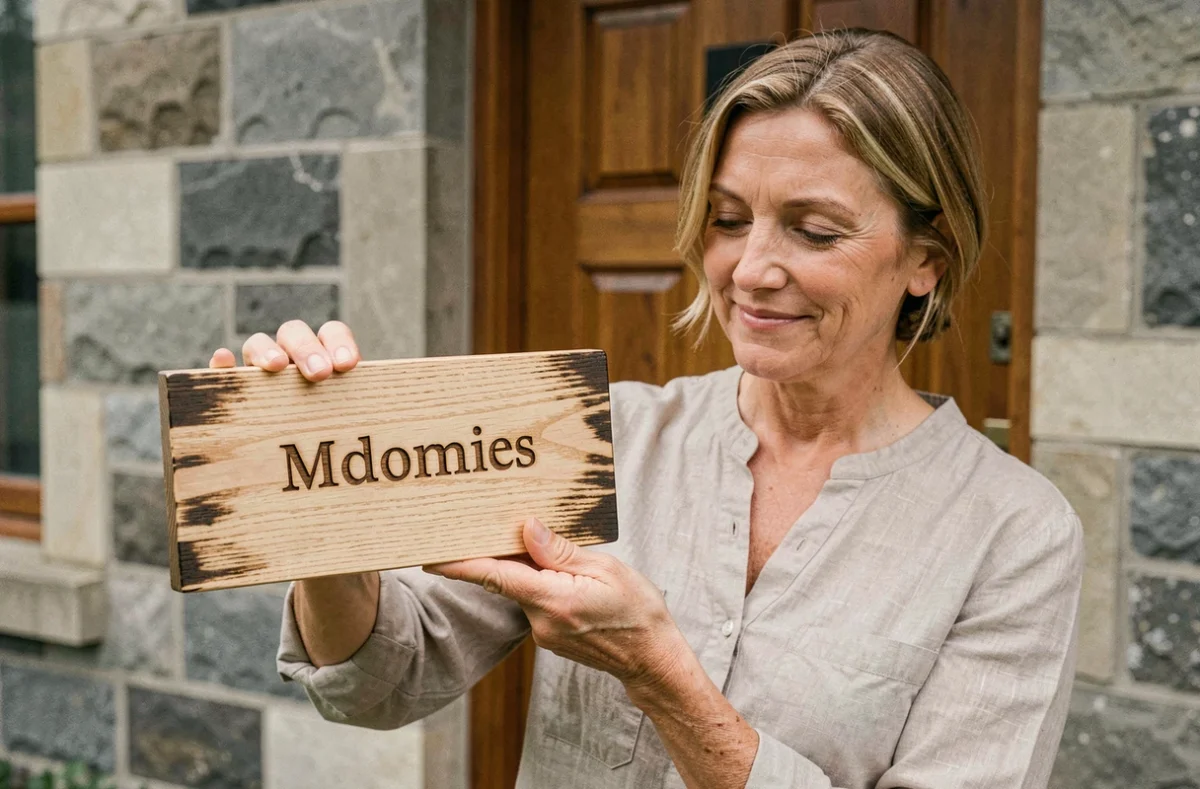
Mechanical engraving limits typographic and graphic possibilities. The laser, digitally controlled, reproduces any vector file: handwritten font, silhouettes of family members, house number integrated into the design, small decorative motif.
The laser reproduces any vector file without additional costs related to complexity. Adding a pictogram or a fancy font does not significantly change the production time, unlike mechanical engraving where each complex shape lengthens the milling process.
The available data does not allow for a conclusion on a systematic price difference between laser engraving and mechanical engraving for standard mailbox plaques. The price depends on the material, size, and supplier much more than on the process itself.
What truly distinguishes laser engraving for family use:
- The sharpness of fine details, suitable for children’s names or personalized motifs that families appreciate.
- The absence of burrs or chips on the support, even on soft materials like thin PVC.
- A contactless marking that does not deform thin plaques, allowing for a clean adhesive application.
The choice of laser engraving for a family plaque is particularly justified when the project includes personalized graphic elements on a support intended to remain in place for several years. For a simple name in capital letters on a standard plaque, the difference with other processes remains marginal. The real question to resolve before ordering is not the process, but the combination of material-location-fixing that will ensure the plaque remains readable season after season.