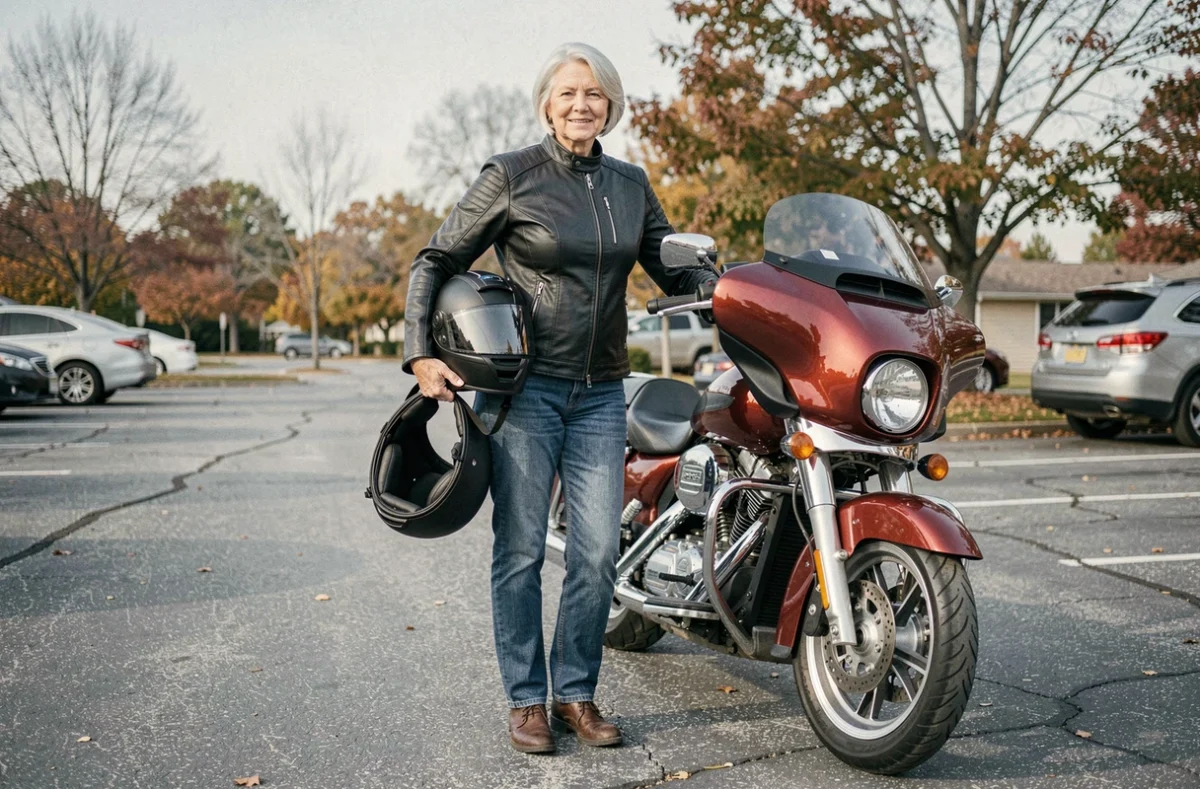
Getting a motorcycle licence after 60 is no extraordinary feat. In France, there is no age limit preventing you from enrolling in A2 licence training or riding a two-wheeler. What changes is your body: less flexible joints, slightly slower reaction times and sometimes reduced grip strength. All of this can be managed, provided you adapt your approach from your very first riding lesson.
First motorcycle lessons after 60: what really causes problems on the training course
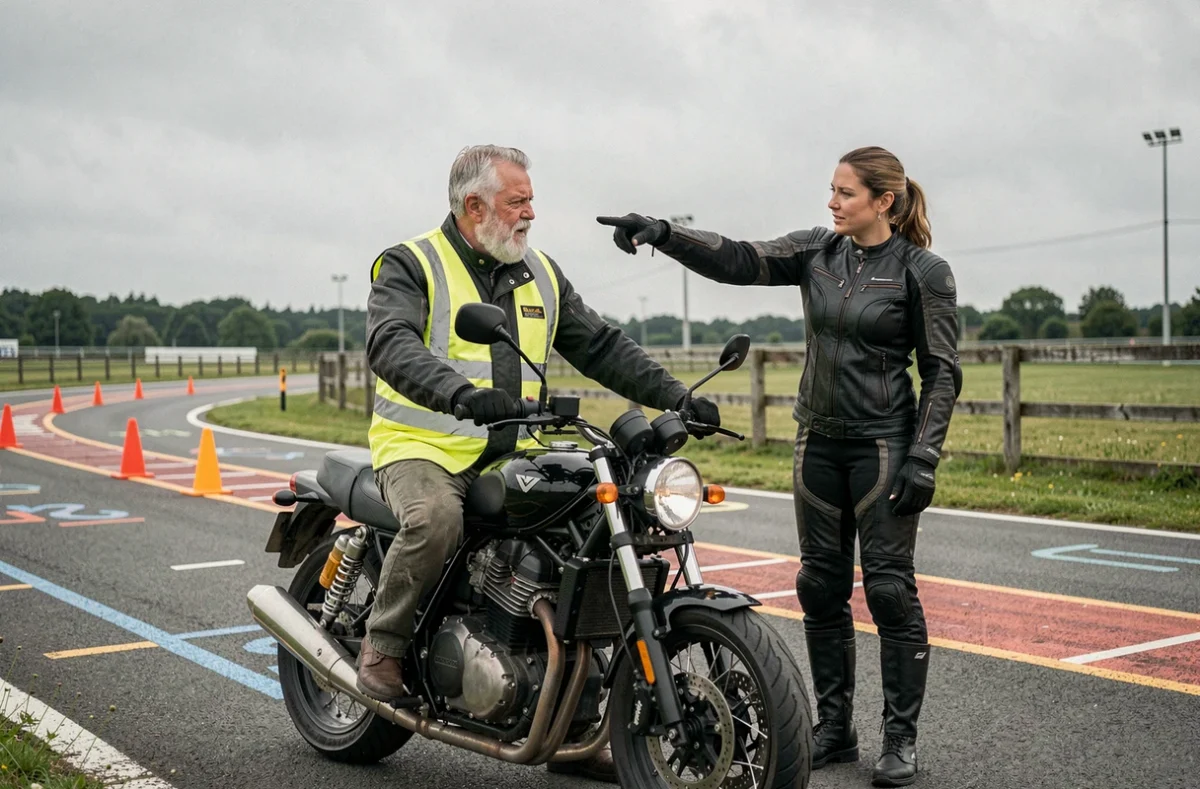
During the first sessions on a motorcycle training course, two manoeuvres regularly cause difficulties for older learners. The first is the slow-speed U-turn. This exercise requires you to turn the handlebars fully while maintaining your balance with your body weight. When your shoulders or wrists lack mobility, your movements become tense and the motorcycle leans too far.
The second challenge is emergency braking. You need to squeeze the front brake lever progressively while pressing firmly on the rear brake pedal. Reduced grip strength increases braking distance. The instructor will spot this quickly and may suggest adjusting the lever closer to the handlebars to reduce the effort required.
Have you noticed that your legs tire more quickly than they used to after an hour on your feet? It’s the same on the training course. Low-speed exercises continuously engage your thighs and calves. An attentive instructor will break up the session: twenty minutes on the course, a five-minute break, then back to it. This pace helps prevent muscle fatigue from affecting your balance and concentration.
If you’re looking for a less imposing two-wheeler during your training, a road-legal mini motorcycle for adults can be a good starting point before moving up to a standard engine size.
Adapting the motorcycle to your build and physical needs
Seat height is the first thing to check. A seat that’s too high forces you to balance on your tiptoes when stopped, making it harder to stay steady. Choosing a motorcycle with a sufficiently low seat lets you place both feet flat on the ground. Several learner-friendly models (Honda CB500F, Kawasaki Z400, Yamaha MT-03) come with low seats or lowering kits.
The weight of the motorcycle matters too. A heavy bike puts considerable strain on your back and arms during low-speed manoeuvres. It’s best to start with a lighter model and move up to a more powerful bike after passing your test.
Fitness and health before riding a motorcycle
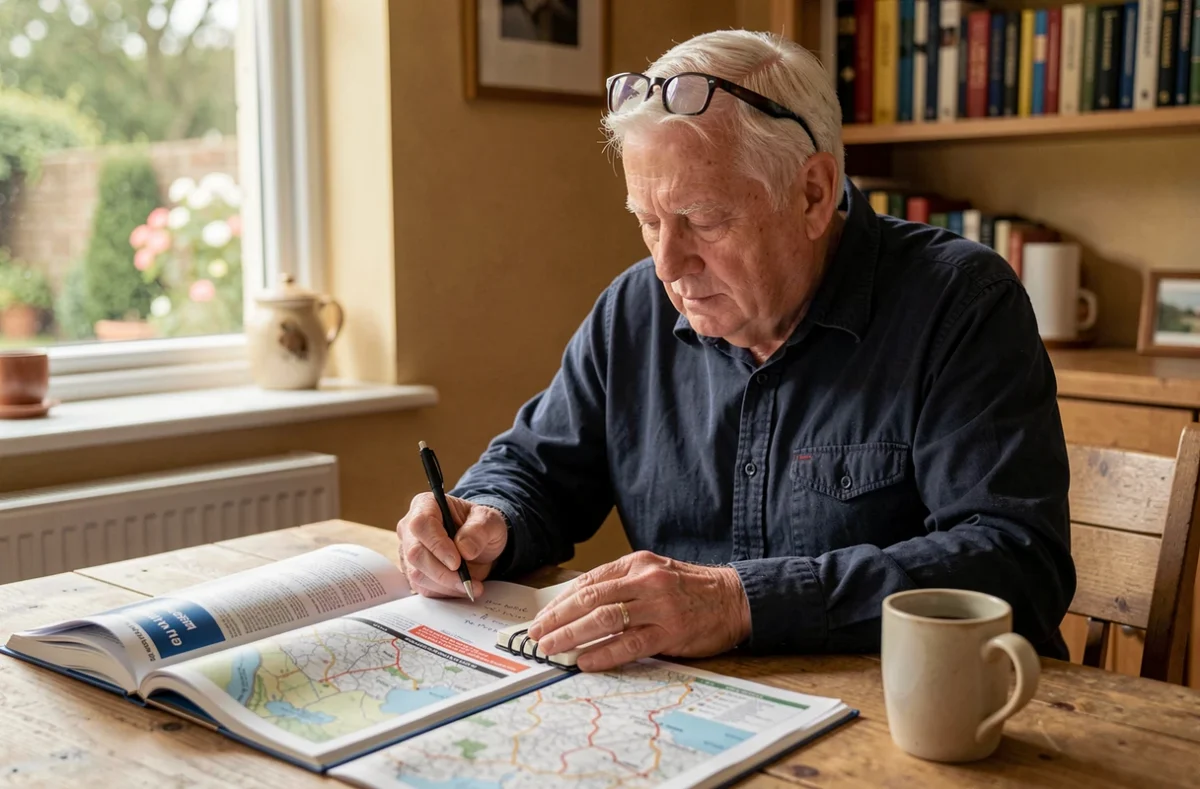
Before signing up with a motorcycle training school, a visit to your GP is a good way to assess your health. Three abilities are essential for riding safely: eyesight (especially peripheral vision), mobility in your neck and shoulders, and reaction time.
- Eyesight: a recent eye test checks visual acuity and contrast sensitivity, both of which are critical for anticipating hazards in traffic
- Neck mobility: you need to be able to turn your head 90 degrees in either direction to check your surroundings before changing direction
- Reaction time: some medications (sleeping pills, painkillers, beta blockers) can slow your reflexes, so talk to your doctor before you start
None of these factors is a deal-breaker. A targeted strength-training programme for your shoulders, forearms and thighs in the weeks before your course can make riding much more comfortable.
Choosing a motorcycle training school when starting at 60
Not all motorcycle training schools are equally suited to older learners. The deciding factor is the size of the groups on the training course. With four learners per session, the instructor can correct everyone’s mistakes. With eight or ten, individual attention drops off.
Why does this choice matter so much? A 25-year-old learner can compensate for poor posture with strength or quick reflexes. At 60, your technique needs to be sound from the outset to avoid developing bad habits that could become dangerous in traffic.
Questions to ask before signing up
- What is the maximum number of learners per training session?
- Can I choose a lighter or lower motorcycle than the school’s standard model?
- Is the instructor willing to adapt the pace of the lessons (breaks, shorter sessions)?
- Does the school offer weekday sessions outside rush hour for a calmer learning environment?
An instructor who refuses to slow things down or insists on using just one motorcycle model isn’t the right fit. It’s better to change schools than to push yourself with an unsuitable setup.
Motorcycle gear for older riders: prioritise protection and comfort
Your helmet should be as light as possible. A heavy helmet can strain your neck after an hour, especially during training-course exercises. Composite-fibre or carbon models offer a worthwhile weight saving compared with polycarbonate helmets.
Your gloves should give you good feel for the controls. Gloves that are too thick make it difficult to apply the front brake correctly. Choose certified gloves with a thin palm and reinforcement along the edge of the hand.
For your jacket and trousers, back and joint protection should be a priority. Bones become more fragile with age, and a low-speed fall on the training course can cause a fracture if you’re not wearing protective gear. A jacket with an integrated airbag is an investment, but it significantly reduces the risk of chest injuries.
High-top boots protect your ankles, which are particularly vulnerable in stationary falls. A flat, non-slip sole makes it easier to put your feet on the ground—a small detail that makes a difference on wet roads.
Learning to ride a motorcycle at 60 simply means accepting a different pace. The motorcycle, instructor and gear can all be adapted. The one non-negotiable is being realistic about your physical limits and being willing to work on them rather than ignore them.