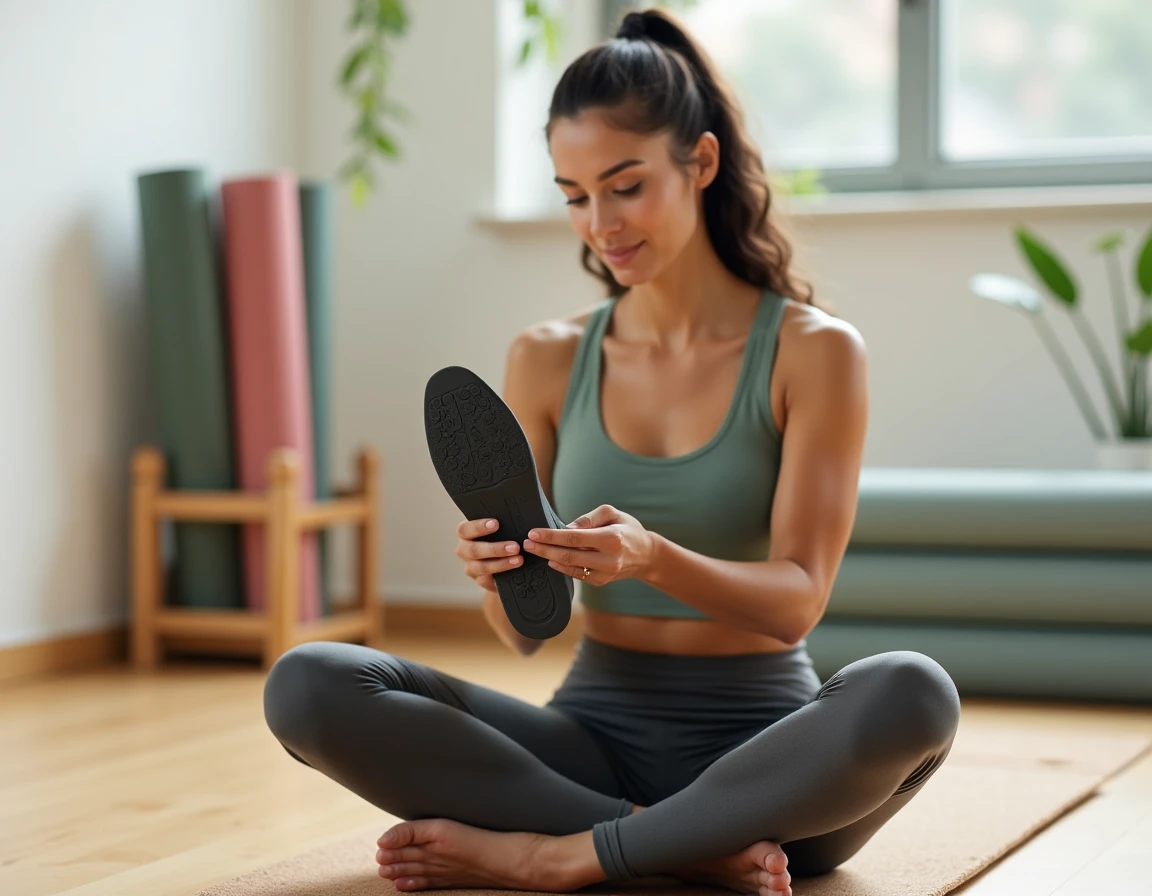
Yoga is traditionally practiced barefoot, in direct contact with the mat. The question of yoga shoes may therefore seem paradoxical. However, it arises in concrete situations: studios that require closed shoes, outdoor practice on cold or uneven ground, plantar pain that makes barefoot postures uncomfortable. The market today offers minimalist slippers, socks with enhanced grip, and hybrid models whose differences deserve examination.
Grip on heated mats: an underestimated factor in hot yoga
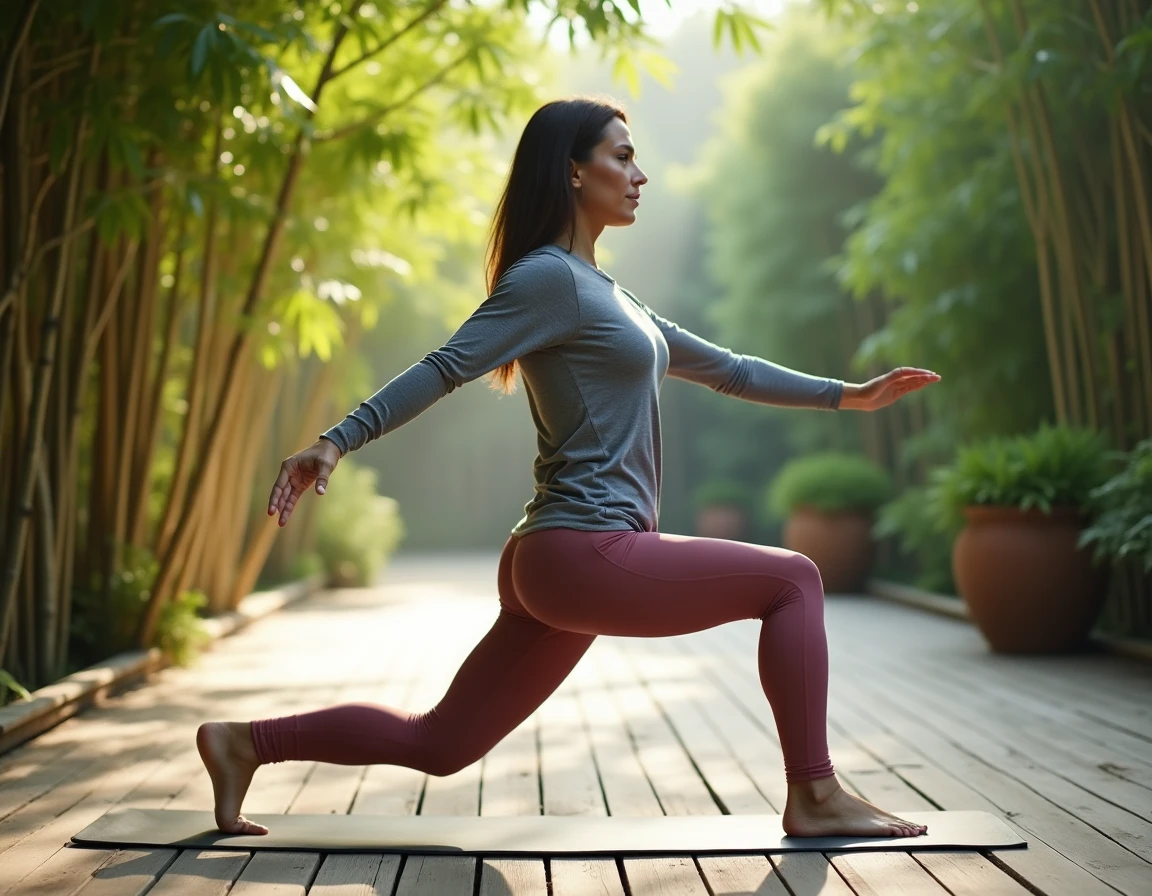
In hot yoga and power yoga classes in heated rooms, sweating radically changes foot behavior on the mat. The combination of heat and sweat increases the risk of slipping, particularly during quick transitions in vinyasa. Several North American studios now recommend socks or slippers with strong grip rather than minimalist sneakers for these formats.
This approach remains poorly documented in French-language content. Most French guides on yoga equipment focus on the mat without addressing the issue of foot-to-ground contact in a warm environment. Identifying the best yoga shoes requires considering the type of class practiced, not just foot morphology.
Grip varies according to the temperature and humidity of the studio. A slipper that works in classic hatha at room temperature may become slippery in bikram. This criterion should be at the top of the list, before flexibility or design.
Minimalist shoes, grip socks, hybrid models: what distinguishes them
Three categories of products coexist on the market, often presented as interchangeable while they meet different needs.
- Non-slip socks cover the foot without a rigid sole. They provide almost direct contact with the ground and are suitable for practices on mats in temperate rooms. Their limitation: they do not protect against cold or hard surfaces.
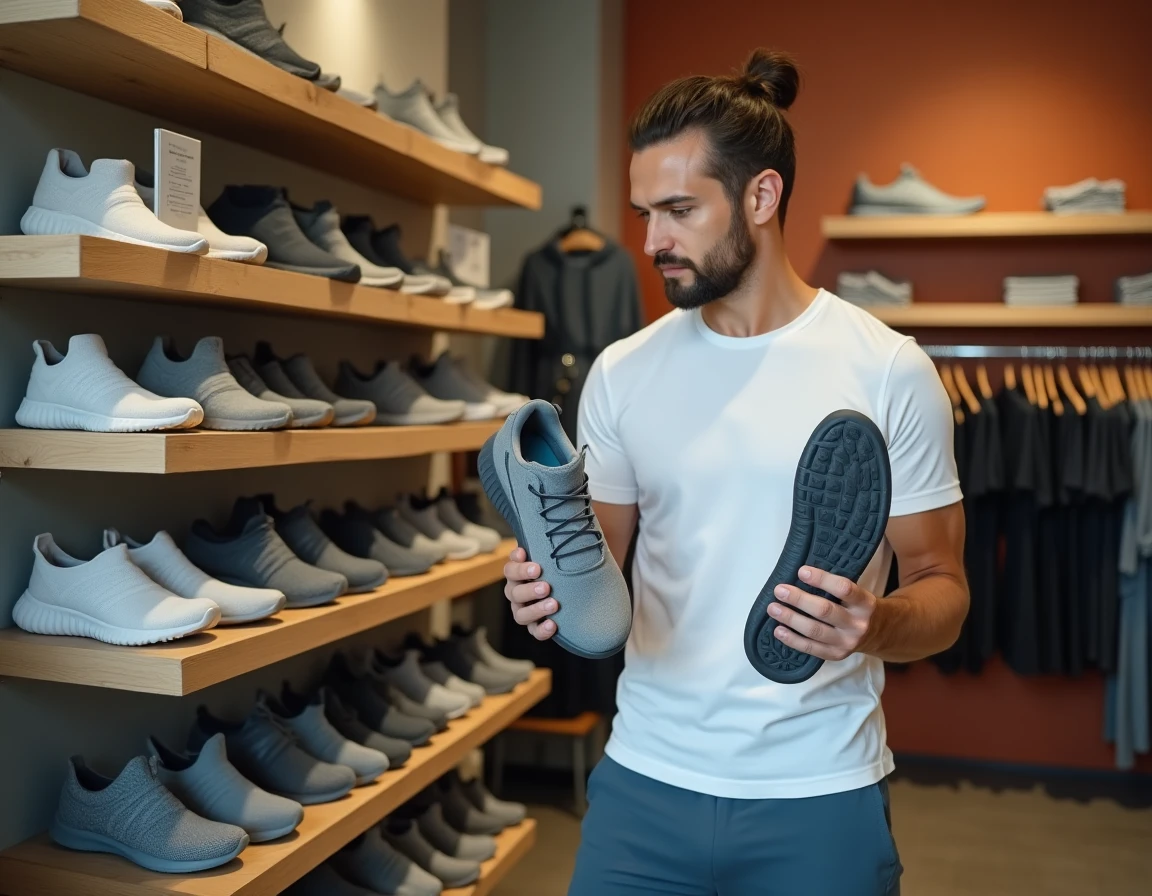
- Minimalist shoes with thin soles (barefoot type) replicate the barefoot sensation while protecting the sole of the foot. They are suitable for outdoor yoga or in studios that require closed shoes. Their flexibility varies greatly from model to model.
- Hybrid slipper-sock models, designed for barre, Pilates, and yoga, combine a soft rubber sole and a mesh upper. This intermediate format is explicitly marketed by some brands for barefoot activities in the studio, but general guides do not compare them to the other two categories.
Field feedback diverges on this point: some practitioners prefer the total freedom of grip socks, while others cannot tolerate the lack of plantar protection after an hour of standing postures. The choice depends on the ground, temperature, and individual foot sensitivity.
Transition to minimalism: what yoga teachers report
Francophone yoga teachers are beginning to share feedback on the gradual shift to minimalist shoes or barefoot practice off the mat. Reported benefits include better posture, a more natural alignment of the foot, and a reduction in certain knee or plantar arch pains.
These observations remain anecdotal and unvalidated by large-scale clinical studies in the specific context of yoga. The transition must be very gradual, over several weeks, to avoid tendonitis or metatarsal pain. Abruptly switching from a thick-soled sports shoe to a minimalist slipper during a one-hour session engages foot muscles that are usually inactive.
A point rarely mentioned in product descriptions: the width of the toe box. In yoga, toe spacing plays a direct role in the stability of balance postures. A model that is too narrow at the front negates the benefits of minimalism, even if the sole is thin and flexible. Ensuring that the toes can spread freely is a selection criterion at least as crucial as the thickness of the sole.
Concrete selection criteria for yoga shoes suited to your practice
Rather than a universal grid, the choice relies on three variables related to your practice context.
The first is the type of ground and environment. On mats in heated studios, grip socks offer the best compromise between grip and sensory feel. On hardwood or hard ground without a mat, a hybrid slipper with a rubber sole provides better protection. Outdoors (park, terrace, beach), a closed minimalist shoe becomes the only viable option.
The second variable concerns the constraints of the studio. Some gyms require closed shoes with covered toes and heels, which excludes grip socks and barefoot practice. In this case, minimalist shoes with a flat and flexible sole remain the most coherent choice to maintain a range of motion close to barefoot.
The third variable is the state of the foot. A collapsed arch, fascia pain, or sensitivity to cold directs towards models with a minimum of support or insulation. Conversely, a foot without specific pathology does not need cushioning for yoga, a discipline where impacts are almost non-existent.
The yoga shoe market remains a niche segment, without specific standards or dedicated labels. The mention of “yoga” on the packaging is a matter of marketing positioning, not technical certification. Testing the model by reproducing some balance postures remains the only reliable way to assess whether the shoe is suitable for your practice. A tree pose or warrior III in the store says more than any technical sheet.