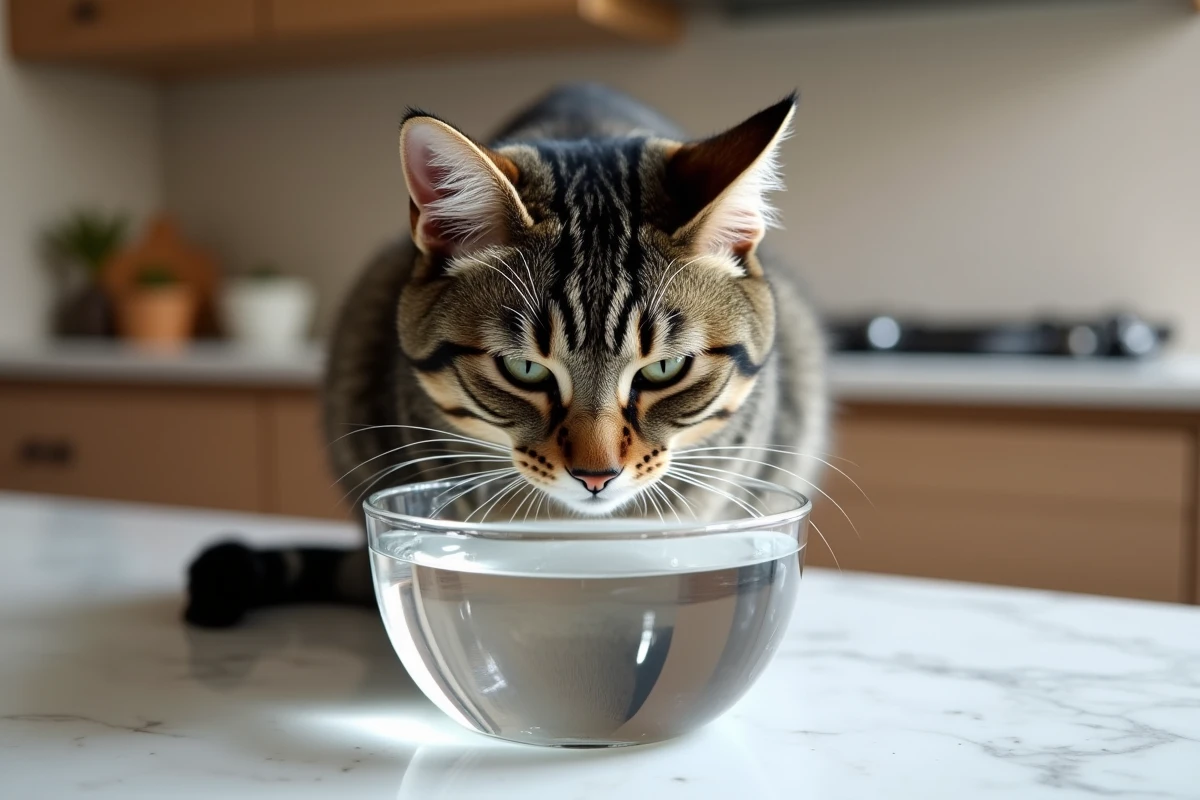
Your cat drinks little, and when it finally approaches its bowl, it sniffs the water before turning away. This behavior is not whimsical. The water you provide plays a direct role in its urinary and kidney health, and the choice of suitable crystal-clear water deserves attention beyond the simple reflex of filling a bowl from the tap.
Mineral profile of water and cat nutrition: a balance not to be overlooked
You may have noticed that some bottled waters display very different compositions on the label? Magnesium, calcium, sodium: these minerals are not trivial for a cat, especially if it primarily eats kibble.
A highly mineralized water combined with a dry diet already rich in minerals can increase the renal load in at-risk cats. This is a point that veterinary nutritionists are increasingly emphasizing. A cat fed kibble already filters a lot of minerals through its kidneys. Adding water loaded with calcium or magnesium is like doubling the stakes.
Conversely, low-mineral water is better suited for cats fed dry food or those with a history of chronic kidney disease. To identify this type of water, look at the dry residue on the label: the lower it is, the less the water contains dissolved minerals. Choosing the best crystal-clear water for cats involves this careful reading of the composition.
If your cat receives a mixed diet (wet food and kibble), the constraint is lessened. Wet food already provides a good portion of its daily hydration, which dilutes the impact of the minerals contained in drinking water.
Crystal-clear water and palatability: what encourages a cat to drink
A cat can have access to the best water in the world; if it doesn’t drink it, it serves no purpose. Palatability, in other words, the taste perceived by the animal, depends on several concrete factors.
Temperature and freshness
Water that is slightly cool and refreshed several times a day attracts cats more than lukewarm water that has been sitting since morning. Frequent renewal also reduces bacterial proliferation in the bowl.
Water movement
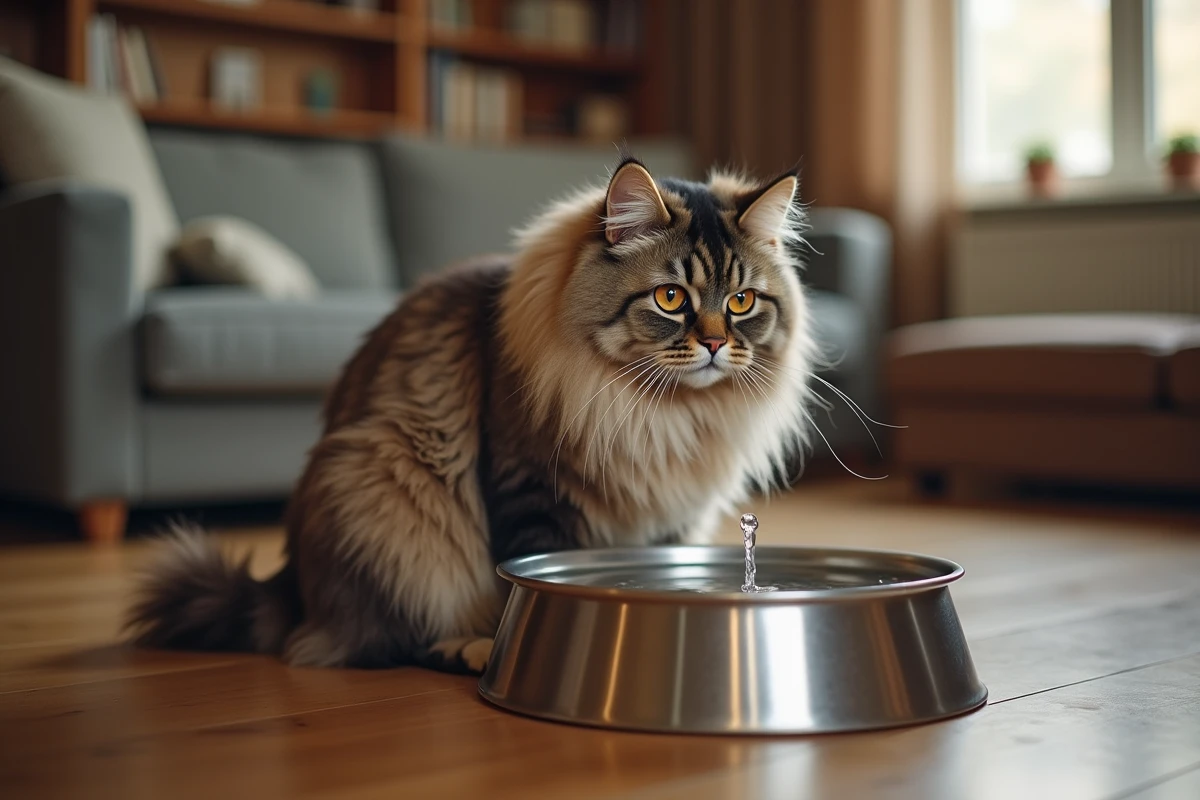
Water fountains tap into a feline instinct: in nature, running water is generally safer than stagnant water. Moving water significantly increases water intake in many cats, which directly contributes to the prevention of idiopathic cystitis and urinary crystals.
Residual odor
The chlorine present in tap water deters some cats with sensitive noses. Letting the water sit for a few hours in a pitcher allows the chlorine to partially evaporate. This simple trick can be enough to convince a reluctant cat.
Here are the palatability criteria to watch for:
- Renew the water at least twice a day, cleaning the bowl to avoid biofilm (that slimy film that forms at the bottom)
- Offer water at room temperature or slightly cool, never icy
- Keep the water bowl away from the litter box and food bowl, as cats prefer to drink away from their feeding area
- Try a water fountain if your cat shows interest in open faucets or the shower
Home filtration: what filters really change for a cat
Recent water fountains incorporate multi-layer filtration systems. They typically include activated carbon, an ion exchange resin, and a mechanical filter. This trio helps reduce hair, debris, as well as certain heavy metals and organic residues present in tap water.
Filtered water remains attractive only if the filters are replaced regularly. A saturated filter becomes a breeding ground for bacteria. Follow the replacement frequency indicated by the manufacturer, even if the filter still looks clean visually.
For owners using a classic filtered pitcher, the principle remains the same: activated carbon reduces the taste of chlorine and some impurities. This is often sufficient to make tap water acceptable in the eyes (and nose) of a picky cat.
Bowl positioning and container material: details that matter
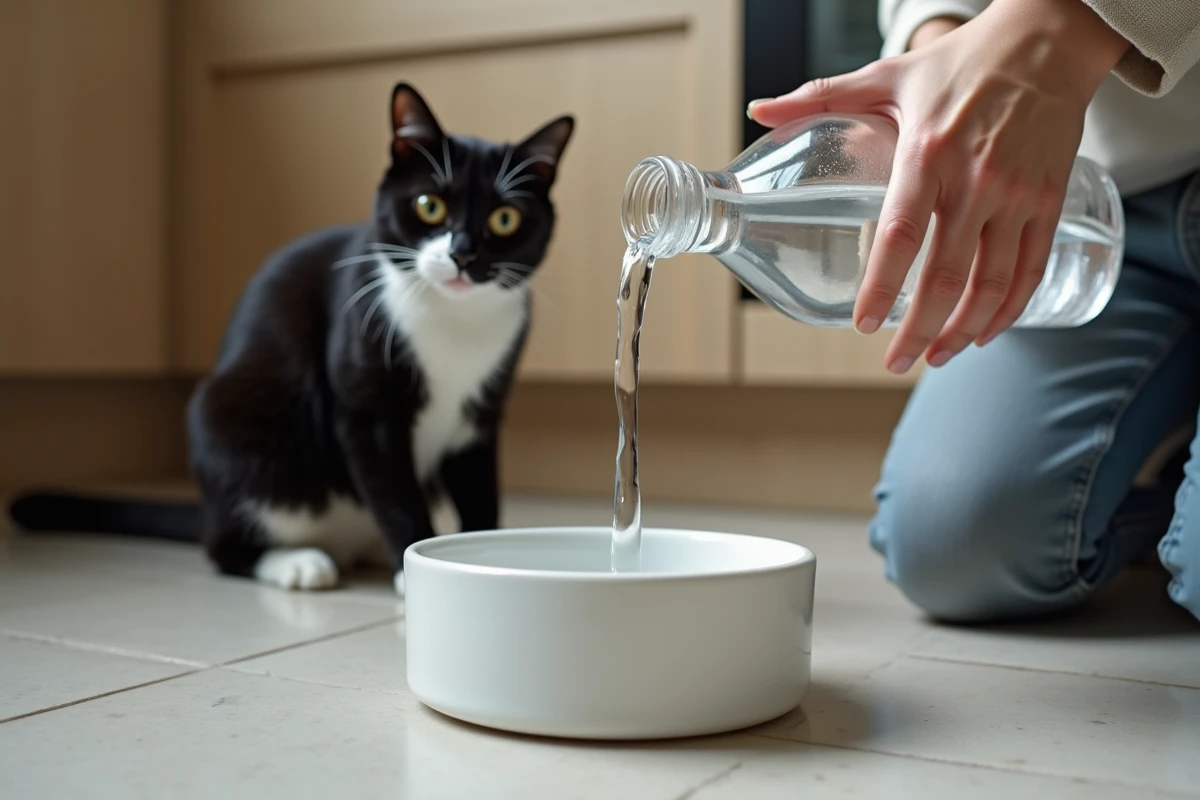
Field feedback on feline behavior shows that the transparency and positioning of the container influence both water consumption and its composition. A cat that can see the water level in a clear glass bowl is more likely to drink than from an opaque plastic bowl.
Plastic poses another problem: it scratches easily. These micro-scratches harbor bacteria that simple rinsing cannot dislodge. Glass, ceramic, or stainless steel are more hygienic materials in the long run.
As for placement, avoid noisy thoroughfares. A cat needs quiet to drink. Providing multiple water points in the home increases the chances that it will hydrate properly, especially in large spaces or multi-story homes.
- Prefer a bowl made of glass, ceramic, or stainless steel, easy to clean and scratch-resistant
- Place at least two water points in the home, away from the litter box
- Opt for a wide and shallow container, as cats do not like their whiskers touching the edges
Bottled water or filtered tap water: what choice for your cat’s kidney health
The question often arises: should you buy bottled water specifically for your cat? The answer depends on the quality of your local tap water and your pet’s health status.
For a healthy cat without urinary history, filtered tap water that is regularly renewed is suitable in most cases. The filter removes the taste of chlorine and some residues, making it comparable to bottled spring water.
For a cat suffering from recurrent kidney or urinary problems, low-mineral spring water may be preferable. Check the composition on the label and discuss it with your veterinarian, who can tailor the recommendation to your pet’s profile.
Highly mineralized water is still not recommended for cats, regardless of their health status. This type of water, designed for human needs, far exceeds the thresholds suitable for feline metabolism.
The choice of suitable water is not limited to a brand or label. It is the combination of mineral composition, freshness, distribution method, and consistency with the diet that makes a difference in your cat’s daily kidney health.