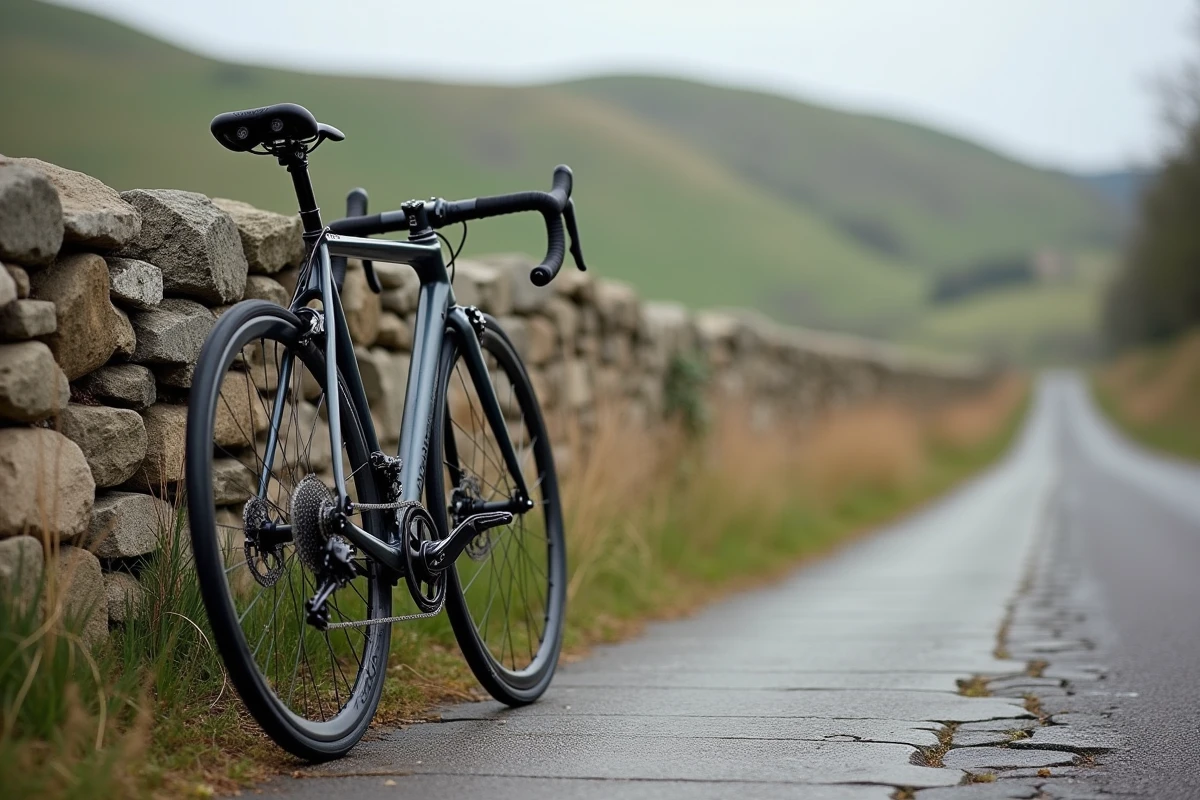
The Scott Speedster 60 holds a special place in the entry-level road bike segment. Aluminum frame, Shimano Claris drivetrain, disc brakes on recent versions: on paper, the specifications check all the boxes expected at this price level. The real question is how this bike performs on the pavement, kilometer after kilometer, against the promises of the catalog.
Geometry of the Scott Speedster 60: what the dimensions reveal about road behavior
The direct competitors of the Speedster 60 often share aluminum frames and Shimano Claris or Tourney drivetrains. The difference lies in the geometry, and this is where Scott has evolved its design in recent years.
Recent versions of the Speedster 60 with disc brakes feature an increased stack and reach compared to older rim brake models. The cyclist finds themselves in a more upright, endurance-oriented position. The older generations with rim brakes offered a shorter, more responsive profile, less forgiving on long rides.
This evolution has direct consequences. Stability in descents improves significantly: the bike is more forgiving of imprecise trajectories. For a cyclist new to road riding, this is a noticeable boost in confidence. However, those accustomed to aggressive geometries may find the recent Speedster 60 a bit “settled,” less incisive during accelerations.
We also compared our observations with the test of the Scott Speedster 60 on APCA AZ, which confirms this comfort orientation in the disc models.

Speedster 60 against its aluminum competitors: comparative equipment table
Rather than listing isolated features, comparing with other aluminum road bikes at the same price point helps position the Speedster 60 in its market.
| Criterion | Scott Speedster 60 | Typical competitor (entry-level aluminum) |
|---|---|---|
| Frame material | Aluminum 6061 | Aluminum 6061 or equivalent |
| Drivetrain | Shimano Claris (8 speeds) | Shimano Claris or Tourney |
| Braking | Mechanical discs (recent versions) | Rim or discs depending on model |
| Geometry | Endurance (increased stack/reach) | Variable, often more aggressive |
| Tire clearance | Up to 32 mm | Often limited to 28 mm |
| Cabling | Partially integrated | External on most models |
The Speedster 60 stands out with its more generous tire clearance than average in this category. Fitting 32 mm tires provides a measurable comfort gain on rough roads without significantly sacrificing performance on smooth pavement.
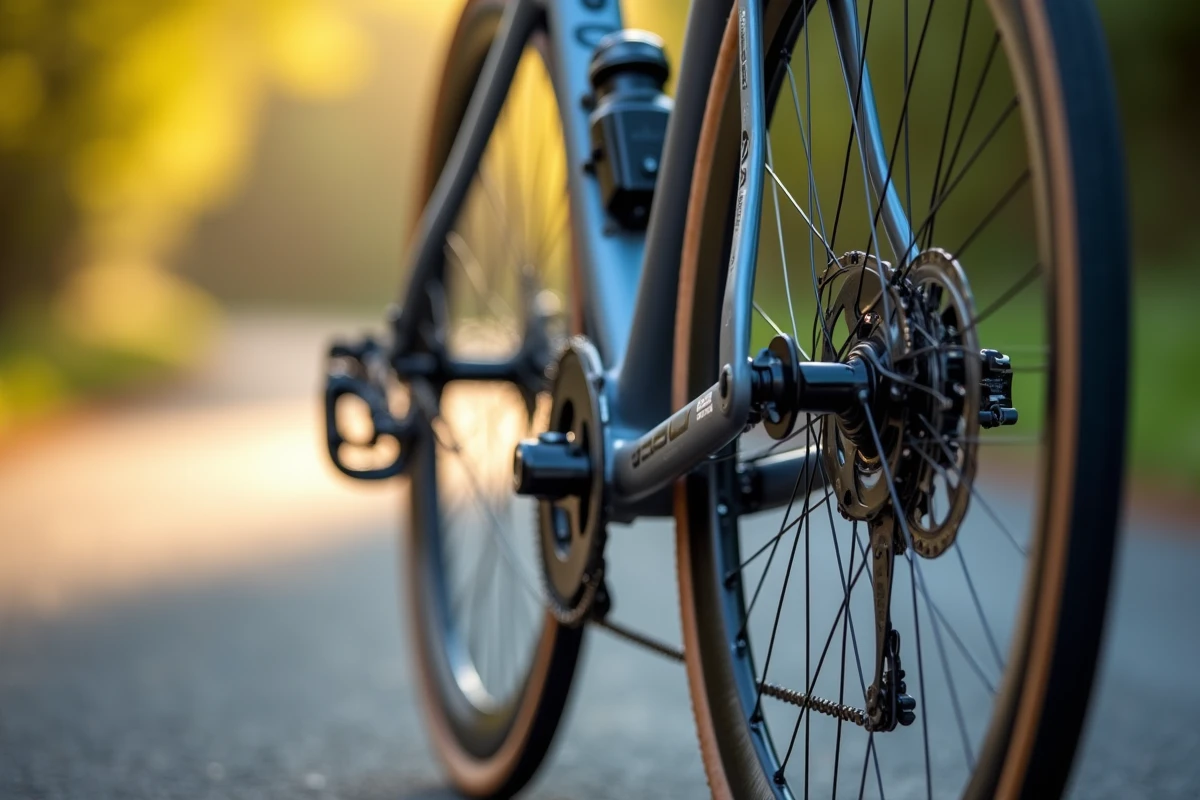
The Shimano Claris drivetrain remains functional for regular use. Gear shifts lack the sharpness compared to a Tiagra or 105 group, but the mechanical reliability of Claris poses no issues over the first few thousand kilometers.
Comfort and handling of the Speedster 60 on long distances
The true test of an entry-level road bike comes after the second hour in the saddle. On short rides, most aluminum frames are comparable. It’s over time that the differences emerge.
The Speedster 60 effectively filters vibrations for an aluminum frame. The combination of endurance geometry and tires mounted in 28 or 32 mm makes three-hour rides quite acceptable without hand or back pain. The carbon fork, present on some variants of the Speedster range, contributes to this filtering.
The original saddle deserves a quick replacement. This is a common point across almost all bikes in this price range: original saddles are systematic cost-saving measures for manufacturers. Investing in a saddle suited to one’s morphology transforms the experience.
Limitations in climbing and under intense effort
The weight of the Speedster 60, which is higher than that of carbon frames, is felt during long climbs. The bike requires more effort to maintain a steady pace uphill. It is not a bike designed for competition or climbers, nor does it claim to be.
In a peloton or during a fast group ride, the frame’s stiffness remains sufficient for strong accelerations. The Speedster 60 does not shy away from effort, but it also does not provide the catapult sensation found on higher-end frames.
Depreciation and second-hand market of the Scott Speedster 60
Entry-level bikes equipped with Shimano Claris or Tourney have seen their resale value drop significantly since the end of the post-Covid shortage. The Speedster 60 is no exception to this trend. Models equipped with Tiagra or 105 groups retain their value better in the second-hand market.
This rapid depreciation creates an interesting situation for buyers:
- A recent second-hand Speedster 60 can be found at a significantly lower price than new, often with very few kilometers on the clock
- Wear parts (cables, brake pads, Claris chain) remain inexpensive to replace
- A well-maintained second-hand model offers a price-to-quality ratio that is hard to beat for starting out on the road
Conversely, buying a new Speedster 60 exposes one to rapid value loss if they wish to resell after a few months to upgrade.
Test road summary: who is the Speedster 60 for
The Scott Speedster 60 fulfills its role for a specific use: regular road outings, without competitive ambition, with a controlled budget. Its endurance geometry, generous tire clearance, and the reliability of its aluminum frame make it a coherent bike for discovering the road or riding a few times a week.
The choice between new and second-hand clearly leans towards the second-hand market, given the rapid depreciation in this segment. The second-hand Speedster 60 represents one of the best entry points for a cyclist who wants to ride without over-investing before knowing their actual preferences regarding frame, position, and drivetrain.