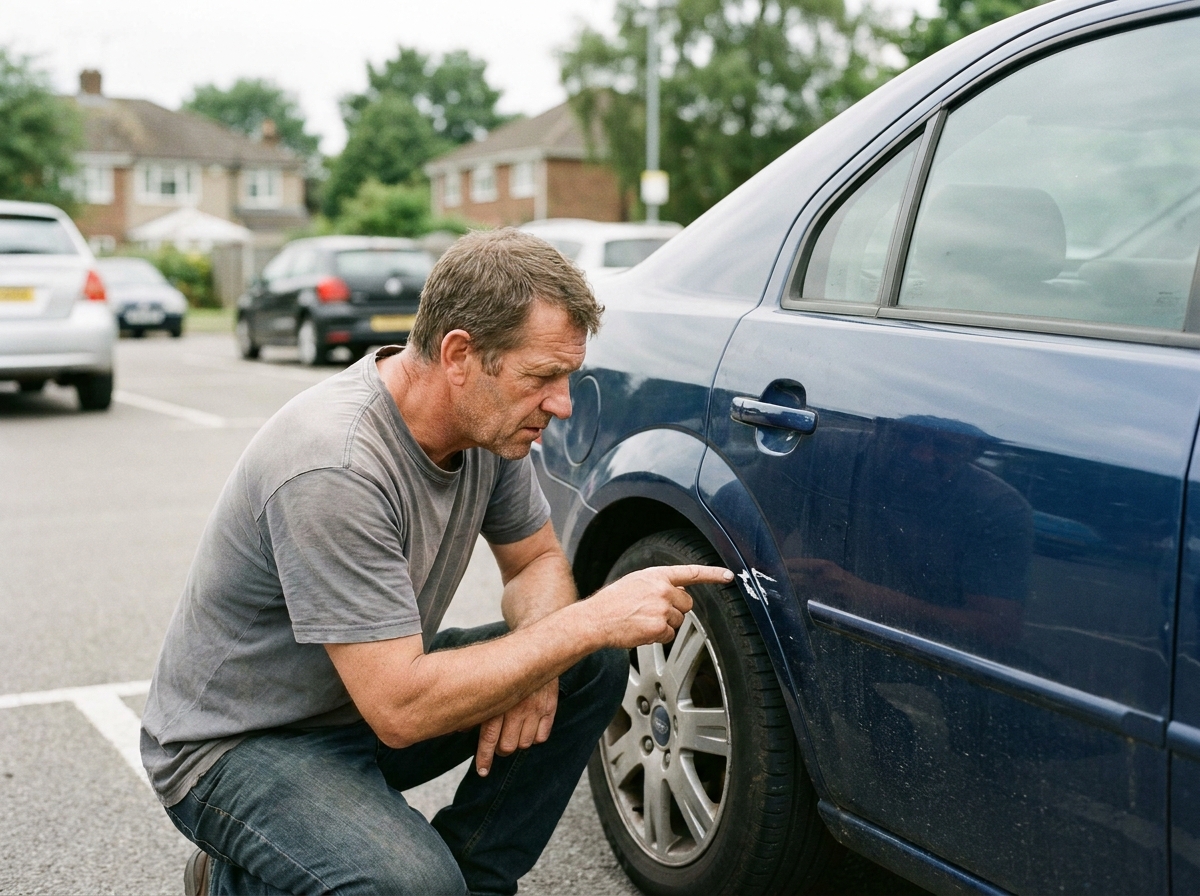
A micro-scratch on the front wing, a chip of paint on the hood, a dull film on the roof: these details go unnoticed in daily life, but they become the primary subject of negotiation when selling your car. The condition of the paint directly influences the buyer’s perception, long before they open the hood or check the maintenance log.
Micro-paint defects and depreciation: what really lowers the resale price
It is often thought that the mechanics dictate the value of a used car. In practice, the buyer who comes to see the vehicle has already filtered the ads by engine type, mileage, and price. What sways their decision on-site is the visual appearance of the bodywork.
An oxidized varnish or untreated projection marks give the impression of a neglected vehicle, even if the mechanical maintenance is impeccable. Conversely, a uniform and shiny paint immediately reassures about the overall care given to the vehicle.
The defects that weigh the most in negotiations are not necessarily the most severe. A gravel chip on the lower body is less concerning than a matte film on the roof or hood, because this film suggests prolonged exposure without protection or maintenance. Deep scratches that reveal the gray primer pose another problem: they signal a risk of future corrosion, and the buyer knows it.
Applying a bodywork protection film in the early years of use remains one of the most effective ways to preserve the integrity of the varnish on exposed areas, particularly the hood, bumpers, and lower body.

Body color and attractiveness in the used car market
The shade of the paint plays an underestimated role in resale. One might think that black, white, or gray, because they dominate the automotive fleet, are easier to resell. In reality, these neutral colors represent more than three-quarters of cars less than five years old on the European market. The result: competition among ads is fierce, and the slightest paint imperfection on a gray or black vehicle stands out.
Recent analyses of used stock in Europe show that bright colors like blue or green stand out in a market saturated with neutral colors. Blue is the most common bright color on recent vehicles, and green is significantly increasing on models less than five years old.
Rarer shades (yellow, purple, bright green) are generally sold for significantly higher prices than the market average when well-maintained. Conversely, colors like brown or silver are associated with more pronounced depreciation. If your car has an unusual color, preserving the shine of that paint before sale becomes a concrete value-adding lever.
Paint diagnosis before sale: checks to do yourself
Before entrusting the vehicle to a detailing or bodywork professional, one can perform a simple visual diagnosis to prioritize necessary repairs. The goal is not to redo everything, but to identify what will catch the buyer’s eye.
Methodical inspection of the bodywork
The inspection should be done in natural light, ideally on an overcast day (direct sunlight can mask some defects and exaggerate others). Each panel is examined from the level of the surface, not standing in front of the door.
- Run your hand over the hood and roof to detect imperfections invisible to the eye: micro-tar projections, resin residues, roughness of the varnish
- Check the edges of the doors and the contours of the wheel arches, areas where paint chips accumulate and where corrosion begins
- Observe the junctions between panels (wings, bumpers, hood) to spot any color differences that reveal poorly executed previous paintwork
- Inspect the roof pillars and the bottom of the windows, often neglected, where the varnish peels off without notice
This diagnosis takes about twenty minutes and allows you to categorize the defects into two groups: those that can be corrected by yourself (polish, touch-up pen) and those that require professional intervention.
Paint touch-ups and detailing: weighing cost against resale gain
Not all bodywork repairs are justified before a resale. The goal is for every euro invested to yield more on the selling price. A complete polishing of the bodywork, performed by a detailing specialist, restores shine to the varnish and reduces superficial micro-scratches. This often provides the best ratio between the cost incurred and the effect produced on the buyer.
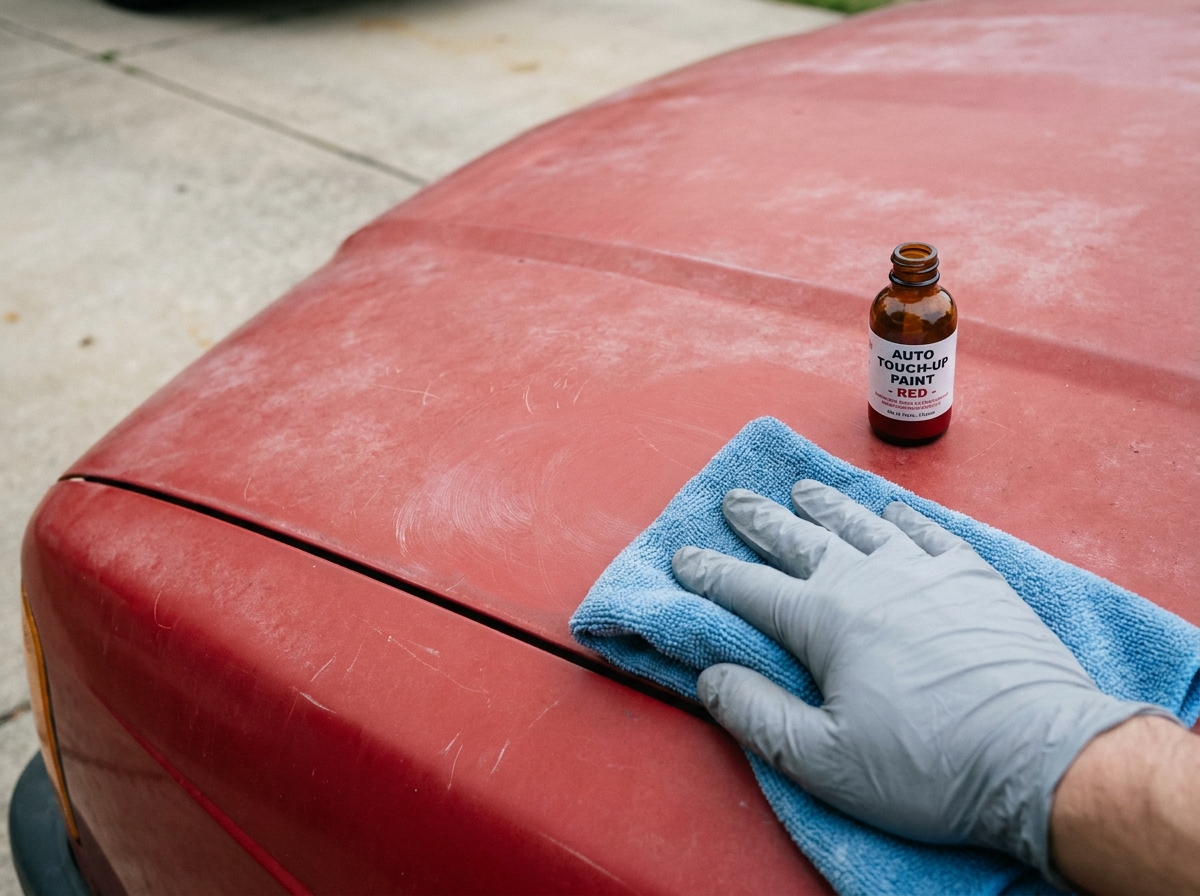
On the other hand, a complete repainting of an entire panel (wing, hood) is expensive and may not always be recouped at resale, especially on a vehicle older than eight years. It is better to focus on localized touch-ups: a touch-up pen matched to the vehicle’s color code can fill a chip for a few euros, and a polish on dull areas is enough to restore uniformity.
What is worth it and what is not
- A machine polish followed by a protective wax: worthwhile on almost all vehicles, regardless of age
- Touch-ups with a pen on gravel chips: inexpensive and effective to stop emerging corrosion
- A complete repainting of a panel: to be reserved for recent or high-end vehicles, where the potential gain offsets the investment
- Replacing a painted bumper that is peeling: often more cost-effective than a new repaint, especially if the part is found used in the right color
A well-executed exterior detailing transforms the perception of a used vehicle without incurring disproportionate costs. The buyer does not see the bill for the polishing; they see a bodywork that reflects light uniformly.
The technical inspection does not focus on the aesthetics of the paint, but an informed buyer knows that degraded varnish allows corrosion to set in. Caring for the condition of the bodywork before putting it up for sale is about protecting the vehicle’s value as much as enhancing its presentation. In a market where ads are multiplying, the paint remains the primary visual argument that triggers or prevents a call.