Strengthening family bonds is not just about increasing shared activities. The quality of interactions matters more than their frequency. Several concrete levers, from screen management to structuring shared moments, produce measurable effects on family communication and the well-being of each member.
Screens in the Family: Comparing the Quota Approach and the Usage Approach
Recommendations on screen time have long relied on a fixed hourly quota. Recent guidelines adopt a different logic: they encourage observing the effects of screens on sleep, mood, and relationships rather than counting minutes.
| Criterion | Hourly Quota Approach | Usage Approach |
|---|---|---|
| Principle | Limit a number of hours per day | Evaluate the impact on sleep, mood, family activities |
| Age Adaptability | Uniform rule, often the same for all children | Evolving rules based on the child’s maturity |
| Child’s Role | Subject to parental rules | Participates in co-constructing digital rules |
| Protected Areas | Not always specified | Meals, bedroom, and time before bed explicitly preserved |
| Type of Content | Rarely distinguished | Age-appropriate content and presence of an adult prioritized |
This table summarizes a paradigm shift. Involving children in defining digital rules fosters their adherence and transforms a source of tension into a family communication exercise.
French health guidelines recommend avoiding screens in the bedroom and before sleep. Recent resources add mornings and mealtimes as moments to preserve in order to maintain dialogue and a stable routine. You can learn more on Blog 4 Web about daily family dynamics.

Shared Meals and Daily Rituals: What Creates a Lasting Effect
Family meals appear in almost all studies on family ties. Their effectiveness lies less in the act of eating together than in the quality of verbal exchange during this time.
Conditions That Make a Family Meal Structuring
The absence of screens at the table is the prerequisite for real exchange. When a phone remains visible, attention fragments, even without a sound notification.
- Designating a physical spot to place phones before sitting down (entryway, living room furniture) reduces the temptation for reflex checking
- Starting the conversation on a specific topic (the best moment of the day, a difficulty encountered) produces a richer exchange than a simple “how was your day”
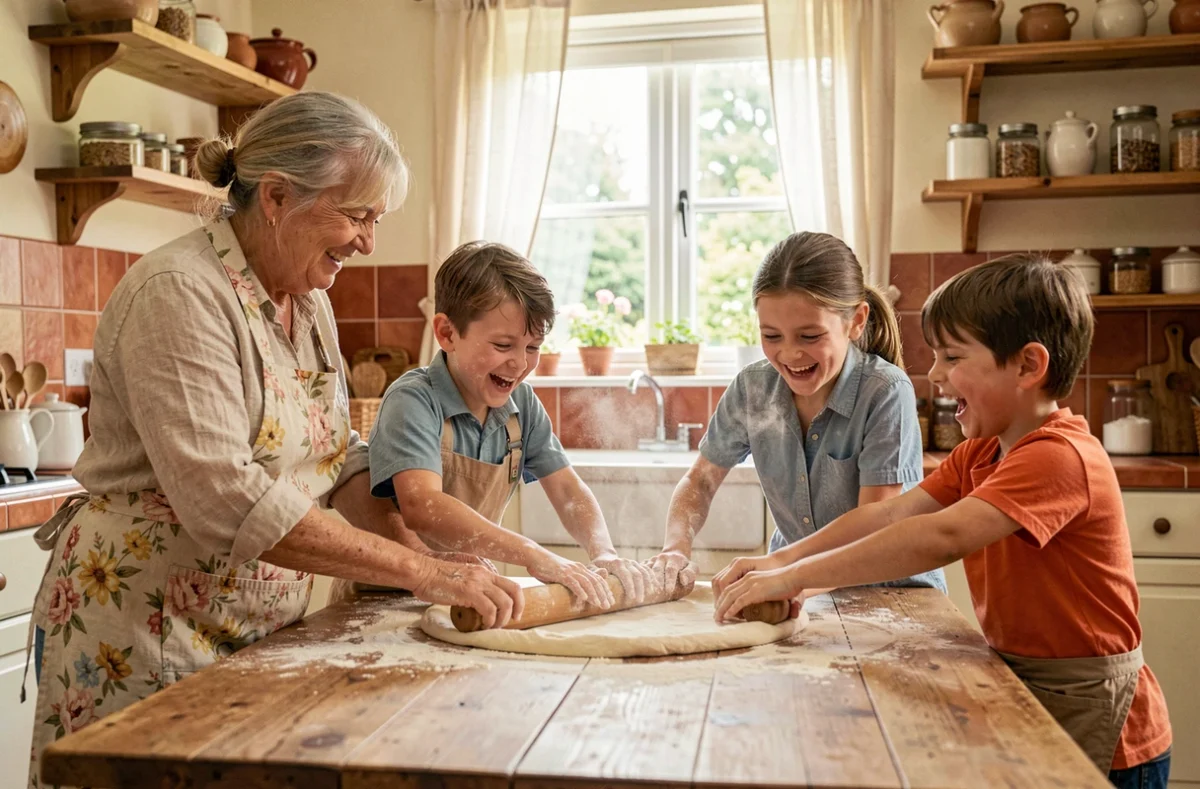
- Involving children in meal preparation creates additional closeness and develops their sense of contribution to the household
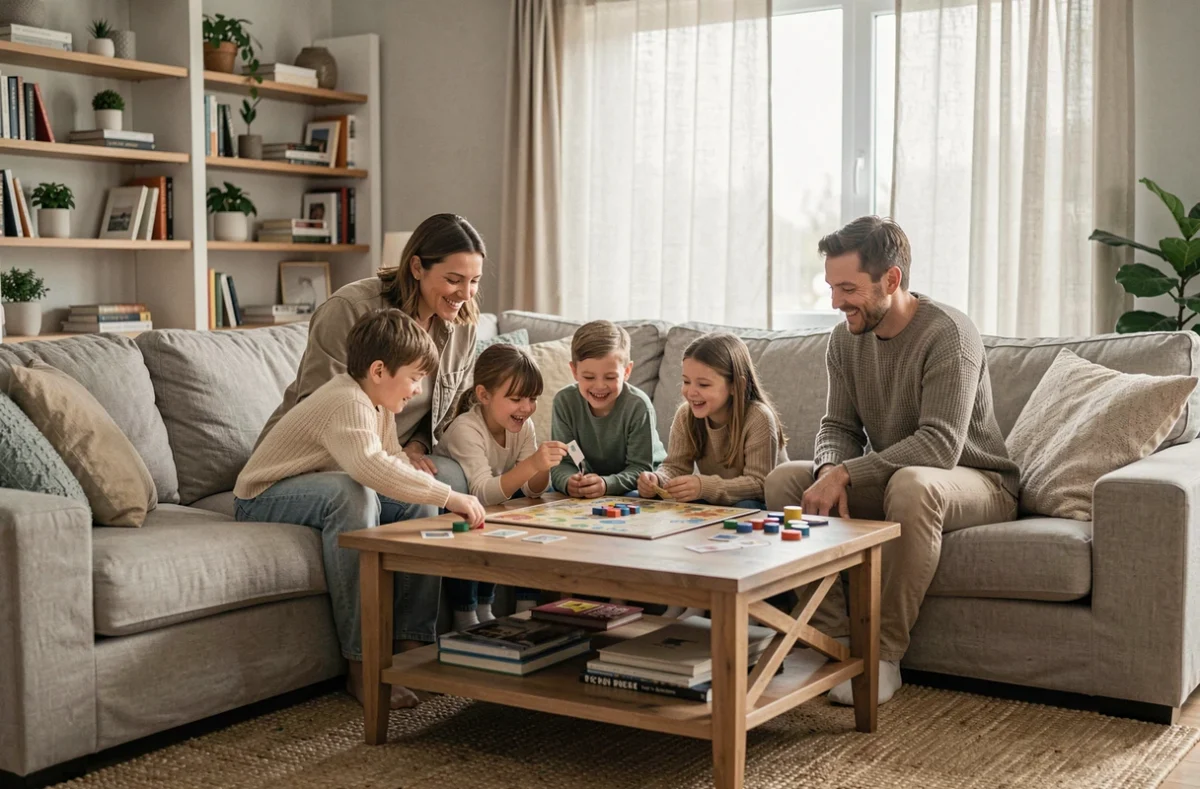
Rituals are not limited to meals. A shared reading time in the evening, a regular walk on weekends, or a weekly board game function on the same principle: regularity creates emotional security.
Rituals That Fail and Why
An imposed ritual without explanation generates rejection, especially among teenagers. The co-construction of rules and activities, a principle already mentioned for screens, also applies to family traditions.
Offering three options and allowing the family to choose together works better than a program decided solely by the parents. This participation mechanism enhances communication and gives each member the feeling of being heard.
Family Communication: Active Listening vs. Passive Listening
Most advice on family communication focuses on “talking more.” The real issue lies in listening.
Active listening involves rephrasing what the other has just expressed before responding. This technique, used in family mediation, reduces misunderstandings and provides the speaker with concrete proof that they have been understood.
In contrast, passive listening (hearing without reacting or rephrasing) often leaves the impression that the message has not been received. For children, this repeated perception can gradually diminish their desire to share their emotions.
Adapting Communication to Age
A five-year-old does not express emotions like a teenager. Parents benefit from adjusting their approach:
- Before six years: naming emotions on behalf of the child (“you seem sad because…”) helps them build their emotional vocabulary
- Between six and twelve years: asking open-ended questions and waiting for the answer without completing it encourages autonomy in expression
- In adolescence: respecting silences without interpreting them as rejection maintains the bond even when words become scarce
Family Mediation: An Underutilized Lever Beyond Separations
Family mediation is often associated with divorces or child custody. However, it covers a much broader field: disagreements over the care of an elderly parent, distribution of responsibilities within the household, tensions related to care decisions.
Calling on a mediator before the conflict sets in is more effective than waiting for communication to break down. The mediator does not make decisions; they restore the conditions for structured dialogue.
This approach can also apply to tensions between adult siblings, particularly during inheritances or medical choices for a dependent parent. The neutral framework of mediation allows for addressing topics that the family context makes too emotionally charged.
Family ties are built on daily micro-decisions: where to place your phone during dinner, how to react when a teenager is silent, when to seek outside help. Each of these decisions, made consciously, alters the quality of exchanges in the long term.