A clay soil that sticks to boots in November, a sandy soil that retains nothing in July: the starting point for an easy-to-maintain garden is the ground itself. Before choosing plants or laying out paths, it’s beneficial to observe what the soil and exposure dictate. A garden layout that lasts all year relies on a few concrete decisions made from the very first season.
Soil and exposure: two constraints that dictate everything else
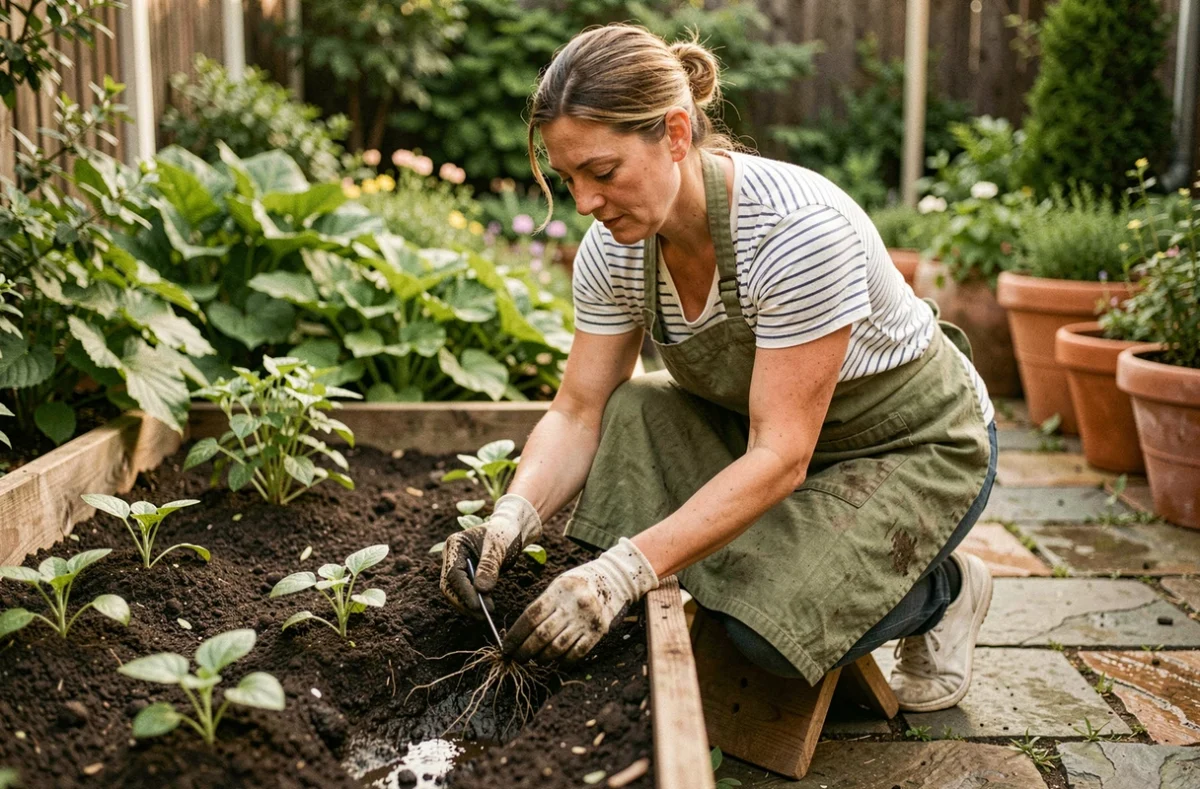
People often start by browsing plant catalogs. A more effective reflex is to dig a hole thirty centimeters deep and see what you find. A compact and moist soil in winter points towards plants with shallow roots and raised beds. A light and draining soil allows for more Mediterranean perennials but requires serious mulching to limit evaporation.
Exposure plays the same role. A permanently shaded corner will never become a productive vegetable garden, but it can host ferns, hostas, or a relaxation area with gravel slabs. Conversely, a south-facing facade in a dry area requires plants suited to heat and thoughtful watering.
Observing your land over a complete cycle (frost, rain, heatwave) before planting anything avoids having to replace half of the plants after two years. Opinions vary on this point, but it is often noted that a year of observation is enough to identify persistent wet areas and dead spots of sunlight.
To find ideas suited to your situation, you can consult the Instant Jardin website for your garden and compare possible configurations based on the area and soil type.
Mulching and ground covers: reducing weeding without depleting the soil
Mulching is the most cost-effective lever to reduce the time spent maintaining a garden. A sufficiently thick layer limits the emergence of weeds, maintains soil moisture, and regulates its temperature. However, not all mulches are equal, and a poor choice can create a problem that wasn’t there initially.
Wood chips and nitrogen hunger
BRF (fragmented branch wood) is often recommended. It nourishes the soil in the medium term as it decomposes. The main risk is nitrogen hunger: the microorganisms that decompose the wood draw on the available nitrogen, which can slow the growth of nearby plants for several months.
To limit this phenomenon, it is best to avoid incorporating fresh wood chips into the soil. Instead, lay it on the surface, in a regular thickness, without mixing it with the earth. On perennial beds established for over a year, this issue rarely arises. For a recent sowing or planting, it’s better to opt for a mulch of hemp or miscanthus, which uses less nitrogen.
Ground covers as an alternative to mulch
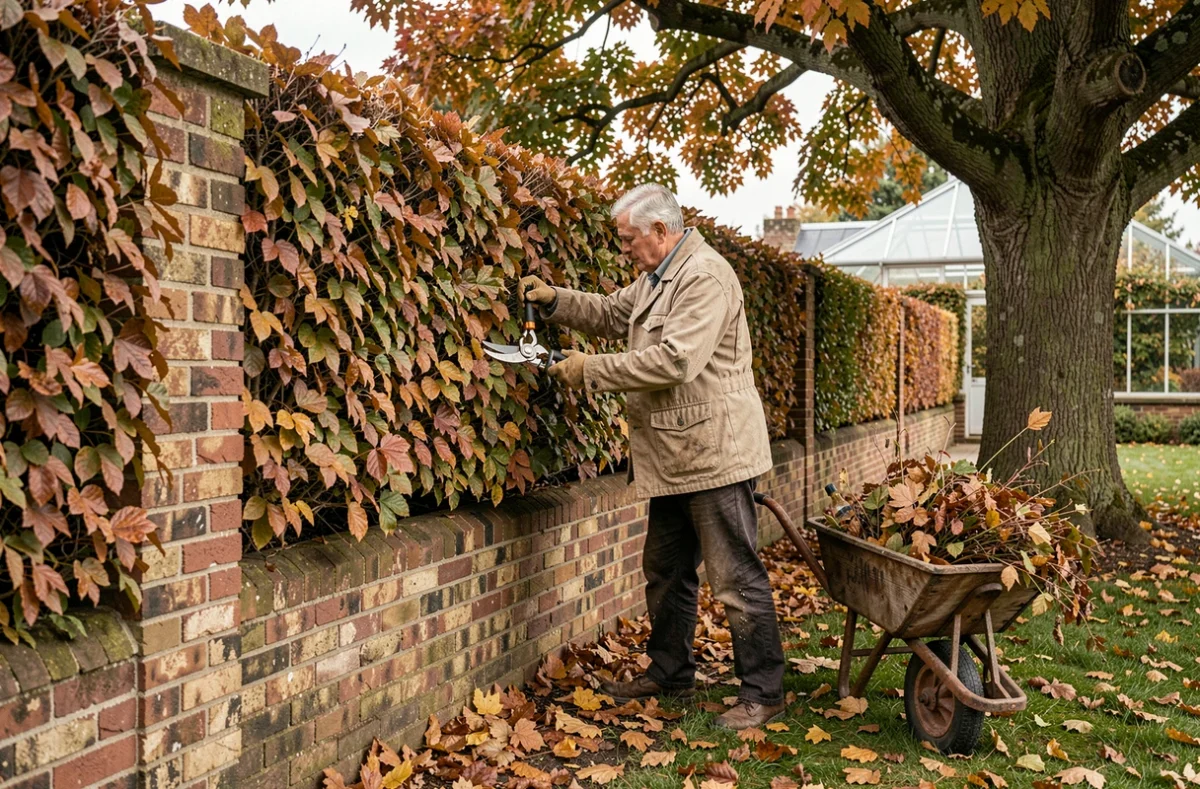
Where mulching needs to be renewed every year or every two years, a plant ground cover (thyme, pachysandra, ground ivy) forms a living layer that renews itself. The initial investment is higher, but maintenance decreases significantly after the second year.
- Thyme: suitable for sunny spaces and draining soils, tolerates light foot traffic, and requires no watering once established.
- Pachysandra: ideal under trees and in shaded areas, retains its foliage in winter, and effectively suppresses weeds.
- Ground ivy: grows quickly, covers slopes and borders, but requires annual pruning to avoid invading neighboring beds.
Rainwater harvesting: what the regulations really require
Installing a rainwater harvesting tank seems like a simple gesture. In practice, the regulatory framework has become clearer. Decree No. 2024-796 of July 12, 2024, has classified rainwater as non-potable. Watering gardens and non-professional vegetable gardens remains permitted, but certain conditions apply.
No cross-connection between the drinking water network and the tank is allowed. Each point of use supplied by rainwater must be labeled “non-potable water.” This is a point that many DIY enthusiasts overlook during installation.
Drought and local restrictions
Having a tank does not exempt you from adhering to prefectural orders during drought periods. The VigiEau service allows you to check, municipality by municipality, the level of restrictions in effect: vigilance, alert, reinforced alert, or crisis. During a crisis level, even watering with stored water may be prohibited.
The sizing of the tank also deserves consideration. People often think in terms of annual rainfall volume, while the real criterion is the number of consecutive dry weeks. A vegetable garden and a lawn do not have the same needs, and a large tank does not guarantee autonomy during a rainless summer. It’s better to couple the water reserve with thick mulching and drought-tolerant plants.
Seasonal garden maintenance: the gestures that really matter
Rather than an exhaustive calendar, focus on the interventions that have the most impact during each period.
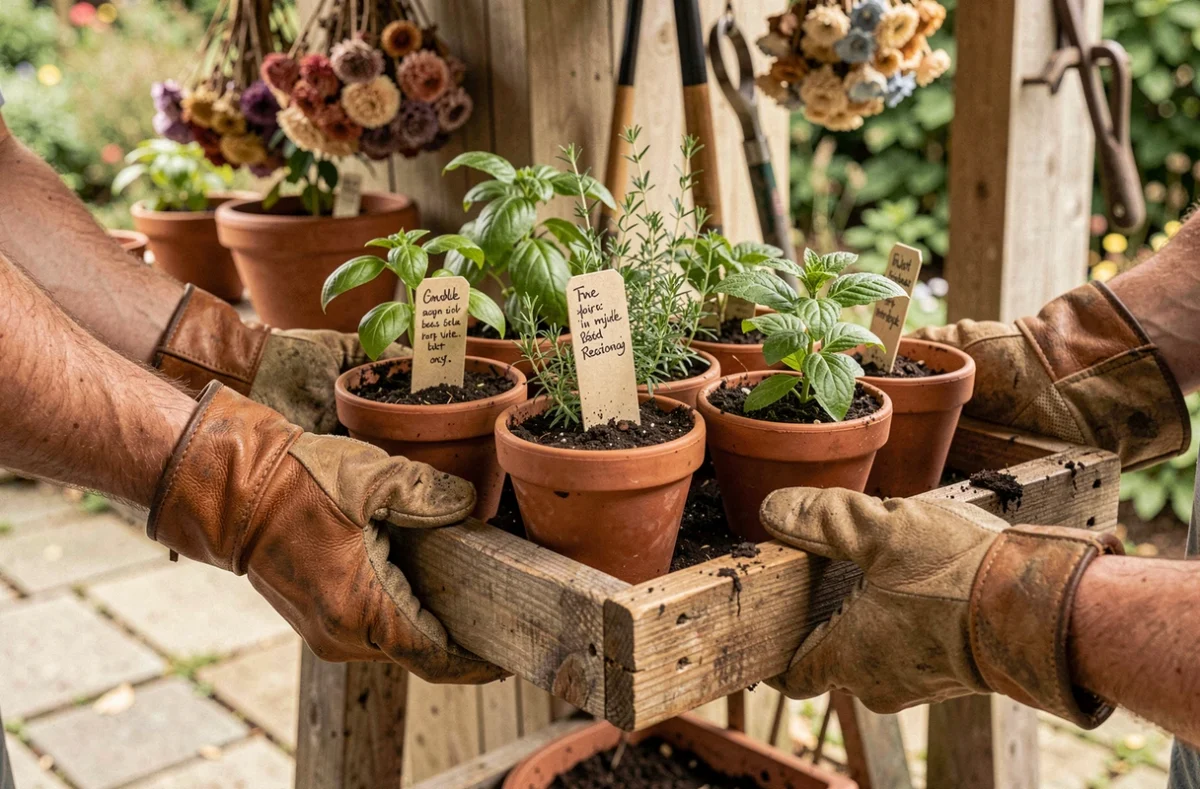
- Autumn: this is the best time to plant bare-root trees and shrubs, and to spread a layer of mulch before winter. Take the opportunity to clean the gutters that feed the rainwater tank.
- Winter: few interventions in the garden, but it’s the time to prune deciduous trees and plan changes for spring. The resting soil does not need to be worked.
- Spring: targeted weeding before weeds go to seed, restarting watering if necessary, checking the mulch. Avoid planting everything at once to spread out the work.
- Summer: watering early in the morning limits evaporation and fungal diseases. Monitor the tank levels and consult VigiEau before watering the lawn.
A garden that requires little maintenance is not an abandoned garden. It’s a space where every element (soil, mulch, plant choices, water management) has been designed to function with minimal interventions. The first few months require more work, but the burden decreases significantly from the second year, provided the right choices were made from the start.