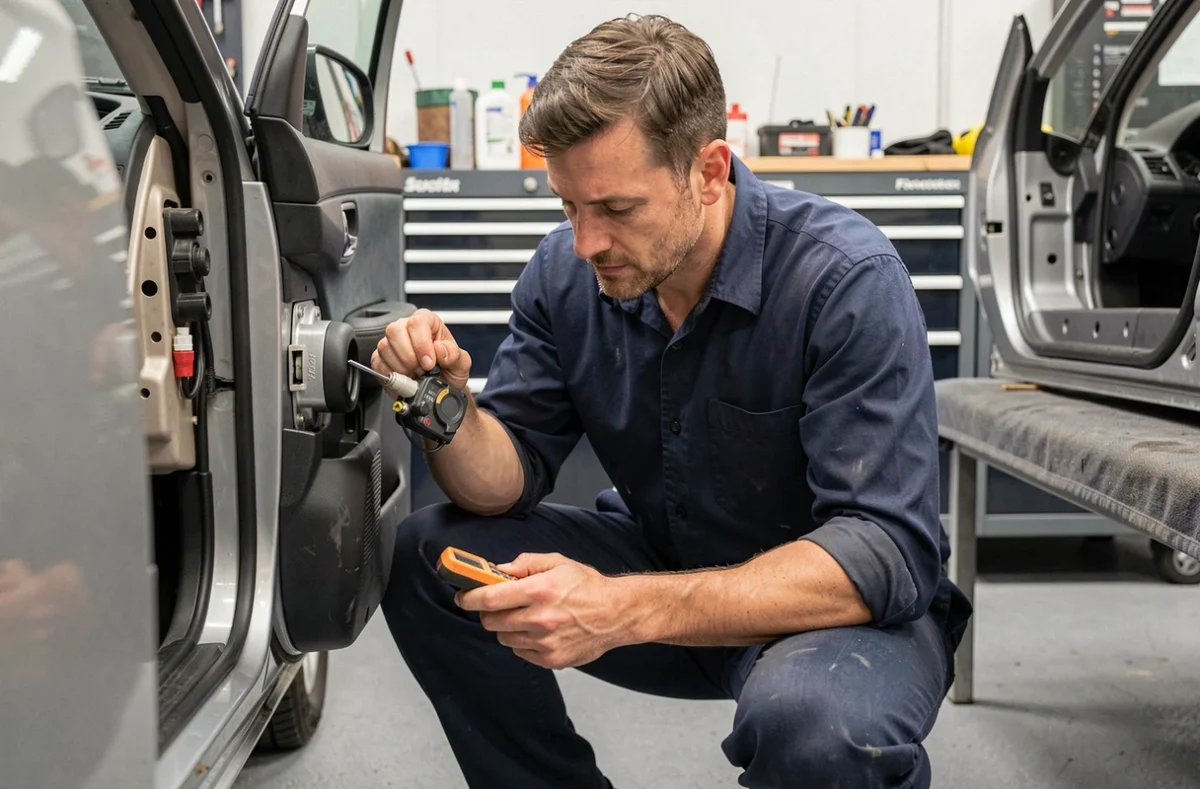
Your remote control no longer triggers anything, a single door refuses to lock, or the entire system remains silent after a storm: central locking failures are common and rarely linked to a single cause. Before replacing a part at random, a methodical diagnosis often allows you to solve the problem in just a few minutes, with minimal tools.
Failure after rain or washing: humidity, an underestimated cause of blockage
Have you noticed that your vehicle’s central locking malfunctions after a wash or a heavy rain episode? This pattern directly points to a problem of water infiltration in the electrical connectors.
The wiring harnesses pass through the doors via rubber bellows. Over time, these bellows crack. Water seeps in, reaches the connectors, and causes false contacts or corrosion on the pins.
The visibly wet connector is not always the entry point for water. Humidity can travel up the harness by capillarity from a cable passage located lower down. Therefore, it is necessary to inspect the entire pathway, not just the actuator connector.
The areas to check first are the splices (junctions between cables), previous body repairs (which may have shifted a bellows), and the adjustment of the pins in each connector. Cleaning with contact cleaner and careful drying is sufficient in most cases. If corrosion has damaged the pins, replacing the connector will be necessary.
By exploring the Serrurier Dic solutions for central locking, you will find additional guidelines to identify this type of failure related to the environment.
Electrical diagnosis of central locking: going beyond the fuse
The classic reflex is to check the locking circuit fuse. This is a good starting point, but stopping there wastes time when the fuse is intact.
Test the door actuator in isolation
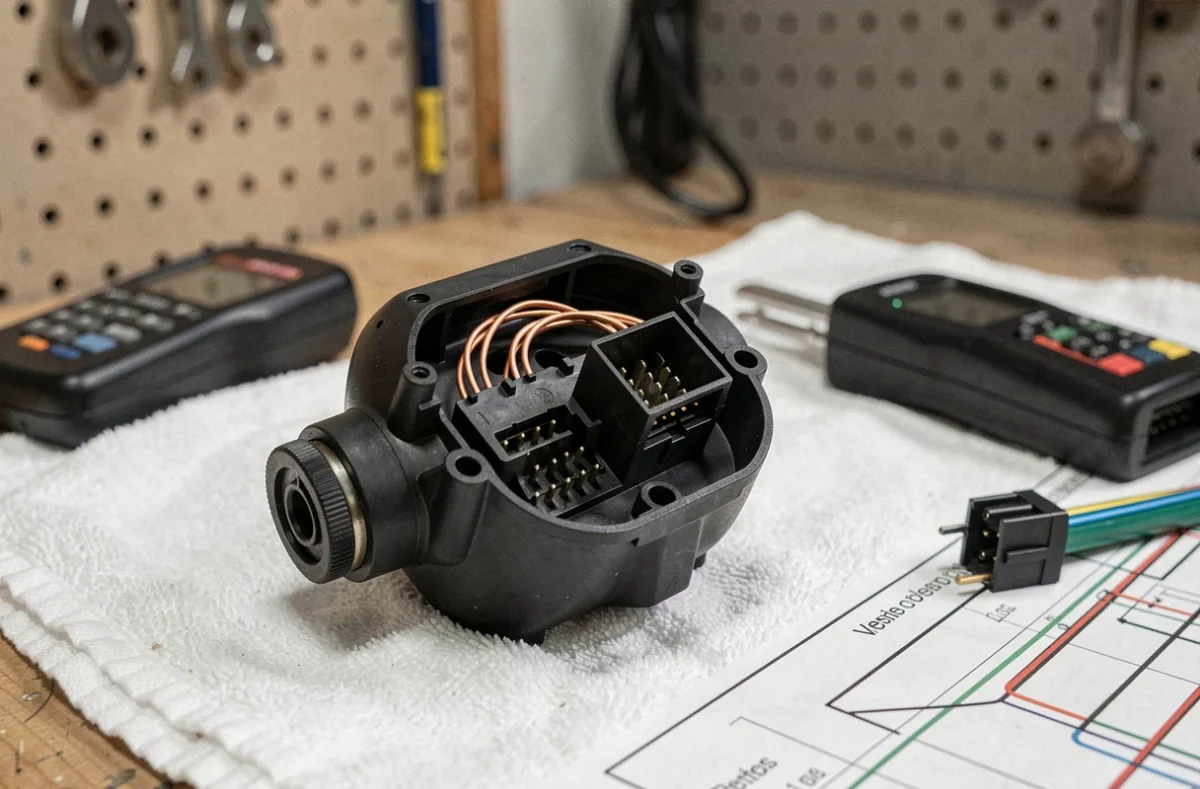
The actuator (the small electric motor in each door) can be tested with a multimeter. Disconnect its connector, measure the resistance at the motor terminals. An open circuit indicates a burnt-out motor. If the resistance is normal, the problem lies elsewhere in the chain.
An actuator that strains or buzzes without locking the door is at the end of its life. This characteristic noise means that the motor is running but the internal mechanism (plastic gears) is broken or worn out.
Check the vehicle’s communication network
On newer vehicles, central locking no longer depends on a simple isolated box. It passes through a CAN or LIN network that connects several control units. A communication failure on this network can perfectly mimic an actuator failure.
A scan of all control units with a diagnostic tool reveals the communication “U” codes. These codes indicate that a module is no longer responding or that there is a break in the data bus. Without this step, you risk replacing a door motor when the problem lies with the electronic gateway.
- Note the control units absent from the network: a missing module may be the one managing the locking of your area (front left door, tailgate, etc.)
- Record the conditions under which the failure occurs: intermittent, temperature-related, triggered by another device (windows, mirrors)
- Check the status of the gateway, which distributes commands between the different networks of the vehicle
- Check the power supply and ground of the affected control unit before concluding its failure
Remote control and key: quick checks before any disassembly
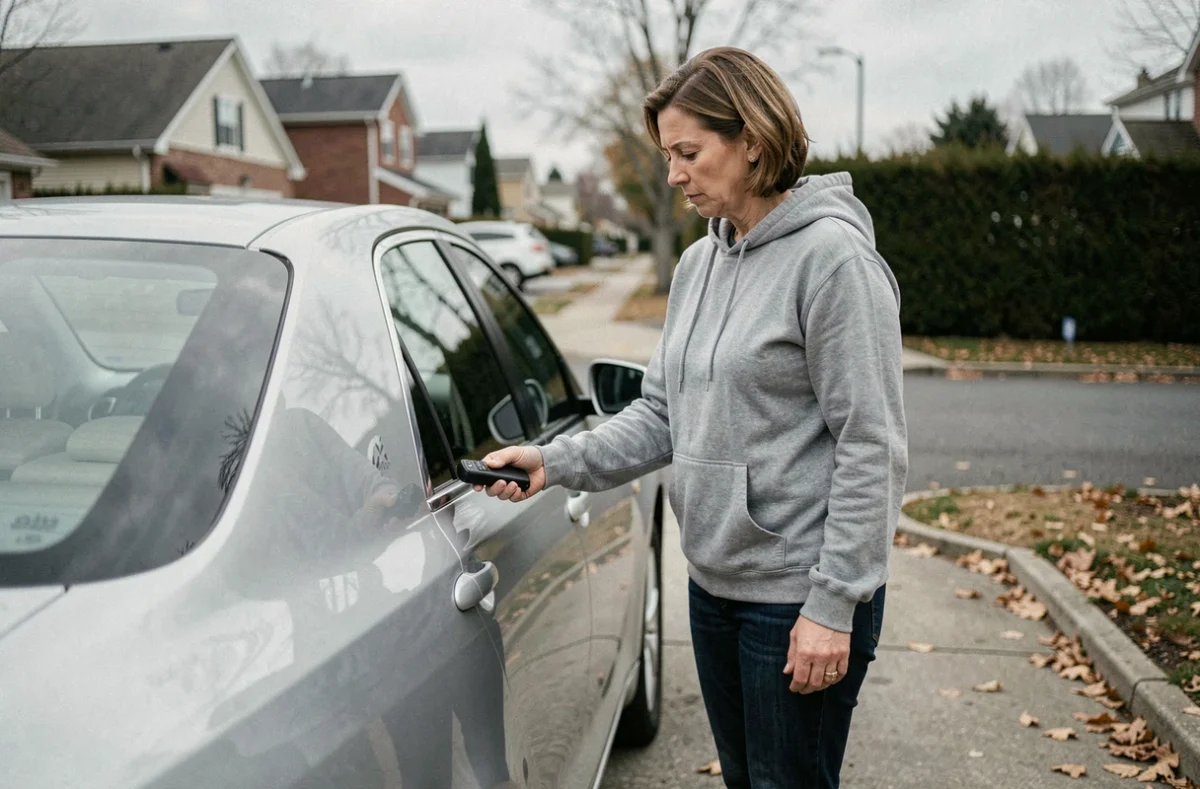
Before opening a door with a screwdriver, start with the remote control itself. A weak battery does not always cause a total shutdown: the signal may simply lose range, giving the impression that the system is unresponsive.
Test with the physical key or the interior lock button. If locking works from the cabin but not from the remote, the problem is localized on the transmitter side. If nothing works, the failure lies with the receiver or control unit.
After replacing the battery, some vehicles require reprogramming of the remote control. The procedure varies by manufacturer but generally involves a specific sequence (ignition on, pressing a button on the key, turning off the ignition). The maintenance manual or technical documentation for the model details this procedure.
Manufacturer recalls and vehicle lock: a step often forgotten
Why replace a part at your expense if the manufacturer has identified a series defect? Checking recalls by VIN number before any repair can save you unnecessary expense.
Manufacturer databases and official platforms list recall campaigns related to locking, control units, or wiring. Some service actions are not published in public records and are only accessible to the authorized network. A visit to the dealership or a call to customer service with your chassis number is enough to verify.
This check takes a few minutes and applies to all vehicles, not just recent models. Recall campaigns can be launched several years after marketing.
When to call a locksmith or automotive electrician
Self-repair has its limits. Three situations justify handing the vehicle over to a professional:
- The lock is mechanically jammed (key turning in vain, broken cylinder): an automotive locksmith has the specific tools to extract a damaged cylinder without damaging the door
- The diagnosis reveals network communication codes ( “U” codes) on several control units: the repair involves reprogramming with a manufacturer tool
- The failure persists after replacing the actuator and checking the wiring: an intermittent fault on the CAN network requires an oscilloscope to be located
A complete diagnosis before intervention avoids paying twice. Replacing an actuator without having checked the network is like changing a light bulb when the problem is with the switch. Take the time to follow the entire chain, from the remote control to the lock motor, before approving an expensive repair.